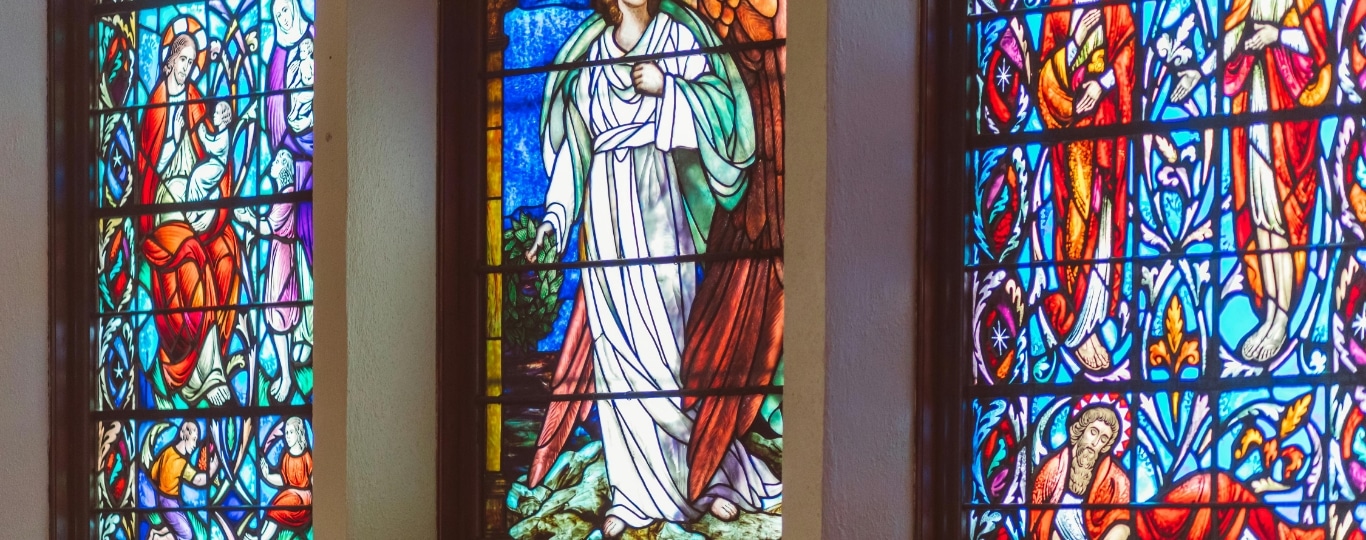
Feast of Holy Innocents
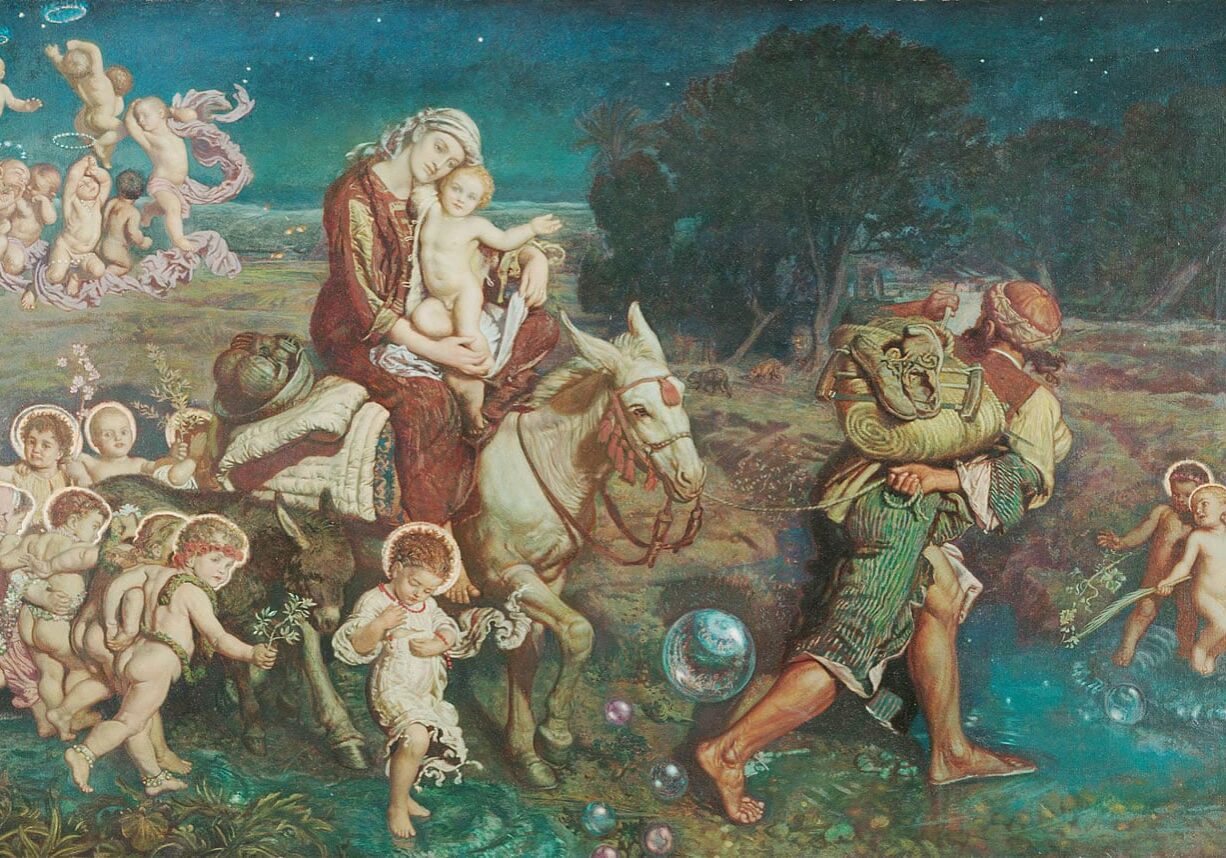
†
It seems somewhat incongruous (and maybe even slightly improper) to sing the song, ‘O come all ye faithful, joyful and triumphant’ on the Feast of the Holy Innocents. Holy Innocents’ Day recalls, with honour, the historical event of the innocent souls who were slaughtered by King Herod, on a day not particularly distant from the Christ Child’s birth in Bethlehem. Herod, fearing an upstart rival for his political and monarchial power, sent his soldiers to slay the multitude of male children in Bethlehem, and in all the districts thereof, two years and younger. For it was from that city and region that the prophets had foretold the One to be Ruler in Israel, whose goings forth were from old, even from Everlasting, would come. (cf. Micah 5.2) In Matthew chapter two, we read about how the puppet of Rome, Herod, aspired to a partnership with the Dragon (that serpent of old, Satan), to devour the Christ Child as soon as He was born. (cf. Rev. 12.4) — Again, it seems somewhat discordant to sing ‘O come ye, o come ye to Bethlehem,’ when that would have been the place from which a great cry, not of joy as in days prior when Christ’ was born, but after Herod’s scheme, from Bethlehem would have issued forth great lamentations, weeping, and mourning because of the deaths of ruined families’ children. — While Holy Innocent’s Day was a very sad day in history, our Christmas hymn still calls us to ‘Come all ye faithful, joyful and triumphant,’ for there we will not only find our Saviour meek and mild, born King of the angels, but we will also find His first witnesses, innocent and full of strength.
The last line of our hymn possesses a curious phrase. It goes: “Child for us sinners; poor and in a manger. We would embrace Thee (Christ Child), with love and awe; who would not love Thee, loving us so dearly?” This line expresses a deep reverence and affection for JESUS and what He would accomplish by His Incarnation – laying down the glory of His Divinity to become a poor carpenter’s son, and then ultimately dying for us. It highlights the joy and gratitude we believers feel for this sacrifice, hoping others, who love us, will also share in our love and admiration for the Christ Child. For if they love us, surely, they would love our Love, too. — Now, imagine the joy and awe that must have been experienced in Bethlehem and in the surrounding districts at the birth of JESUS. On that evening, choirs of angels sang in exaltation, shepherds came with their flocks from the fields to gaze at the wondrous site, and even glorious personages from the far East (wisemen) arrived bearing gifts and bending their knees to the Baby, lying in a manger.
The mothers, fathers, and little children of that area must have participated in the great glad tidings that had come with the birth of the Messiah in their neighbourhood – peace on earth and goodwill toward men was the call of all upon the occasion of our dear Saviour’s birth. — In their joy and merriment, feeling contentment and warmth towards all people, JESUS’ new neighbours must have thought that their leaders and rulers would love Him too. — Yet, they knew not the dark malignancy of envy growing unfettered in Herod’s heart, nor the powerful sway Satan had over his ambitions. Desiring to devour the Child of Light and Truth, even as He was born, the beast “sent forth [his armies] to put to death all the male children who were in Bethlehem and in all its districts, from two years old and under, according to the time he had determined [that the Christ was born]” (St. Matthew 2.16).
This event is to be understood as a historical fact, but it also provides spiritual and moral encouragement. — The Collect for the Feast of Holy Innocents Day implores us to take into consideration the ministry of the most blessed Innocents, hoping that we will be inspired by their very short, but very holy lives. “The point of the Collect is that, as the Innocents ‘confessed GOD, not by speaking, but by dying,’ so we, by the mortification of our vices, should confess Him, not only with our lips, but in our lives [by giving up ourselves to His service, by walking before Him in holiness and righteousness, all the days of our lives]. — Please carefully observe the antithesis: the Innocents glorified GOD by dying, and we by living; they glorified GOD, not with their tongues, but with their short, uncompromising lives … The Collect points out that the glory with which the Innocents glorified GOD was by the innocency of their deaths, so we, called upon to live, speak, sing, and pray, are to glorify Him by the innocency of our lives…”1
How could the death of these Innocents glorify GOD? — On its face, they are the quintessential exemplars of Christian martyrdom. “They glorified GOD by their deaths, because their deaths contributed to GOD’s highest purpose – the salvation of His fallen creature, man. This salvation could not be but by a Saviour, who in His life was to fulfil all righteousness in the Mosaic law, and in His death, to submit to the curse of that law imputed upon sinful man. All the hopes and prospects of our race, therefore, were suspended on the Saviour’s reaching manhood. Cut off in infancy, He could neither have obeyed the precept of the law in His life, nor submitted Himself by His Passion to the curse of that law. And, humanly speaking, He was on the very point of being cut off in infancy by Herod … if others had not died to save Him with their earthly lives, so that He afterwards might give up His earthly life to save their souls. In another and lower sense, these Innocents rescued by their innocent blood, the Child JESUS, so that by His most perfectly, innocent Blood, He might redeem all people.”2 You see, though Herod’s assassins came and performed their barbarous deed, being heavily distracted with their nefarious errand, the Holy Family escaped to Egypt, Joseph being warned in a dream to steal away to that country until Herod’s death. (cf. Matt. 2.13-15)
And though we might think of this story as tragic, sad, and possibly one that could have been avoided, its occurrence was necessary to fulfill all scriptural righteousness. (cf. Hosea 11.1) For some will ask, “Why could the life of the Holy Babe not been secured without any suffering to these poor Innocents and their mothers? Has not God all resources at His command? Could He not have struck Herod dead, or have made him relent of his cruel purpose at the last moment? Such is not GOD’s way. He does not interfere with the freedom of the human will. He does not compel a man either to forbear from what is wrong nor to do what is right. Through the present system of things, He allows history to work itself out unto the end, and to develop freely all the vice and misery which The Fall has brought into it. And though GOD has sometimes worked by miracle … He always, out of respect for His own laws [of love and freedom], contents Himself with the least amount of miracle which will serve His purposes, employing instead, ordinary human agency, wherever it is open to Him to do so.”3 Thus the Innocents laid down their lives for His purpose, and saved the life of His Son.
Thus, on this Feast of Holy Innocents, brothers and sisters, we are encouraged to take up the mantle of glory that those children in Bethlehem bore and glorify GOD ourselves. — The tyrants of the world will always come looking to destroy JESUS, for they will neither love Him nor us, because we come joyful and triumphant, with love and awe, to gaze upon and worship the One who is to reign Realized Israel – whose goings forth are from Everlasting to Everlasting. — GOD glorified the Innocents because of their deaths, and we pray He will glorify us also, because of our lives. With GOD’s help, we are called upon in our Collect today to mortify and kill the vices that continue to abide in us – the habits and inhibitions that would prevent the innocency of action and words required to glorify GOD in our age. – “And if a distinction is to be drawn between ‘mortify’ and ‘kill’, we must take ‘mortify’ to represent the gradual process of exterminating vice through godly sanctification, and ‘kill’ to be the ultimate result of that process … [We are to], ‘Mortify, therefore, our members which desire those things upon the earth; fornication, uncleanness, inordinate affection, evil concupiscence, and covetousness, which is idolatry (Col. 3.5).’ [And we,] ‘as strangers and pilgrims in this world (our citizenship being of Heaven), are to abstain from fleshly lusts, which war against the soul (1 Ptr. 2.11)’ … Innocency of life, freedom from vice, good moral character … these are not to be despised nor struck down … they will enable us to shine like lights in the world, and to glorify GOD by our good works and holy examples.”4 To become like the Holy Innocents of Bethlehem, laying down our lives, wills, pride, ambitions, agency, and preferences for the life of JESUS and His call. This is our charge! — May GOD so strengthen us by His grace, that by the innocency of our lives, being sanctified by His Holy Spirit, continually filled with the spiritual life of His Son’s Body and Blood, and remaining constant in faith and hope as one Body in faithful assembly, we mortify and kill all the vices remaining in us, so that we may glorify GOD throughout all ages, world without end. Amen
—
1 Goulburn, D.D., D.C.L, Edward Meyrick, Volume 1 of The Collects of the Day: An Exposition Critical and Devotional of the Collects Appointed at the Communion, (London: Longmans, Green, and Co., 1897), 106.
2-3 Goulburn, 107.
4 Goulburn, 108.

Join Us for Biblical Worship, Study, & Fellowship
Sundays:
Coffee and Fellowship 8:30 am
Catechesis for all ages 9:00 am
Holy Communion 10:30 am
Recent Sermons
Twelfth Sunday after Trinity
Worship with Us
Join us for Biblical worship, study, and fellowship. We currently meet in the sanctuary of Christ the King Lutheran Church in Waxahachie.
Catechesis for Adults and Children 5+
Sundays at 9:00 am
The Order of Holy Communion
Sundays at 10:30 am
Fellowship Opportunities
See our calendar for other weekly and special events.