Septuagesima Sunday
†
The interesting thing about JESUS’ description of the Kingdom of GOD, is that He commonly
uses agricultural imagery to describe it. I believe there are several reasons for this. First, farming
is mysterious on the one hand, and predictable on the other. Everyone knows, even folks with
no farming experience, unless you plant a seed in fertile soil, see that it receives plenty of water
and sunlight, and is protected from predatorial birds and insects, you cannot have a crop. At the
same time, even a seasoned farmer, knowing all the things needed to produce a crop and bring
it to fruitful harvest, even he cannot explain how the seed grows – only that it does grow, in the
proper environment. Mysterious and yet, predictable, or at least elementarily understandable –
that is the Kingdom of GOD as JESUS describes it.
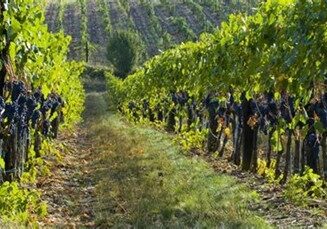
So, when JESUS speaks about the Kingdom of GOD being like a vineyard, we have some concept
of what the Kingdom of GOD is like, and how it grows. – And like the processes that must be
followed to see a seed grow into a healthy, bountiful plant, every Christian knows that unless
the Gospel is preached to a people seeking salvation, they cannot be saved. – The question
today is, given the mystery and limited comprehensibility of the Kingdom of GOD, what does it
take to bring a crop of souls to full health and bountiful harvest?
First, we learn from today’s Gospel parable, that it takes many hands with differing degrees of
contribution to work GOD’s vineyard properly, so that it bears much fruit, bringing to full eternal
health, many souls. “GOD hires laborers, not because He needs them or their services, but
rather, to keep poor men to work, in kindness to them, to save them from idleness and poverty
… For, the soul of man stands ready to be hired into some service or other … either a servant to
iniquity, or a servant to righteousness. (cf. Rom. 6:19) … We are put to a choice, for hired we
must be – for a man may go idle to hell; but he that will enter the Kingdom of Heaven, he must
be busy about the Householder’s business.”1 Thus, the Householder, by His grace, goes to find
laborers early in the day who are willing to work for Him. And, not being satisfied with just the
number of workers He finds early in the day, the Householder also goes out every three hours
looking for more workers, even up until one hour before dusk. The Householder is not picky, He is
simply looking for workers, no matter the degree of their contribution to the working of His
vineyard, if they contribute to the tending of His crops, and they keep from being idle, He will
hire them.
Now, as you can imagine, it is the expectation of human nature, that if someone contributes
little to a project, they should reap little from the fruit of that project. Similarly, if someone
contributes greatly to a project, that person should benefit greatly from the fruits of that
project. – This human characteristic is not evil; it is a positive, intrinsic trait built into our nature
that we might come to know GOD. The understanding of fairness helps people, even if they
have never learned about GOD or His divine nature, to understand that there is a
transcendental and universal justice of right and wrong, which GOD has established and governs.
– For, from our the earliest of ages, we can understand what is fair and what is not. For
example, you might hear in any average home in modern America: ‘It is not fair that sissy gets to open her presents on Christmas Eve, while I must wait un????l Christmas morning to open mine.’ –
Or in the aisles of any grocery store: ‘It is not fair that I was waiting to park in that space with
my blinker on, only to have another person zip into the spot before me.’ Fairness, as C.S. Lewis
describes it, “Is a real law which we did not invent and which we know we ought to obey.”2
In the parable, JESUS uses this universal edifice of fairness as a foil, when He purposefully
disrupts the human sense of justice in His story. We read: “So when evening had come, the
owner of the vineyard said to his steward, ‘Call the laborers and give them their wages,
beginning with the last to the first.’ And when those came who were hired about the eleventh
hour, they each received a denarius. But when the first came, they supposed that they would
receive more; and they likewise received each a denarius. And when they had received it, they
complained against the Householder, saying, ‘These last men have worked only one hour, and you
made them equal to us who have borne the burden and the heat of the day.’ (St. Ma????hew 20,8-
12). – The Kingdom of GOD is paradoxical: JESUS knows it, and the characters in His parable
know it.
The paradox is that GOD operates within the framework of a different economy of fairness. In a
‘would be’ perfect kingdom of men, every person would find their reward according to their
merit; being bonused or penalized according to their contributions to the work of the world’s
kingdom. But as we know, we do not live in a perfect world, otherwise, Mr. Musk and his team
could go home earlier than expected. — But GOD’s Kingdom is working itself out daily unto
perfection. And in that Kingdom, according to JESUS’ parable, one is rewarded according to
what is agreed upon, and no more, though this was unsettling to some. “In a society with no
welfare provisions or trade unions, where unemployment meant starvation, the action of the
Householder in employing extra workers whom he did not really need so late in the day was an
act of generosity. But even more extraordinary was the rate of pay given by the Householder, which made no economic sense, and understandably provoked grumbling among those who felt unfairly treated. It was not unfair, of course, for the Householder to pay a day’s wages, a denarius to those who worked
a day, and to those who only worked one hour. No one was underpaid; it was just that some were
treated with ‘unreasonable Kingdom generosity’ and others were treated with Kingdom
‘reasonableness.’ That is what the Kingdom of Heaven is like. GOD’s grace is not limited by our
ideas of fairness; His gifts are far beyond what we deserve.”3
JESUS’ parable has many important insightful theological meanings and applications, but the
teaching that GOD is ‘unreasonably generous’ is one of the most significant. His ‘unreasonable
generosity’ to give His laborers what they need and not what they deserve, begins when we
realize that by His grace, after building His vineyard, planting it, preparing it, and organizing it,
He still had a healthy enough balance sheet to be able to hire laborers to benefit and contribute
to the vineyard’s bountiful harvest. Further, the Householder’s generosity is displayed by the
fact that He went out to find His laborers – they did not seek Him out nor offer Him their labor.
And a????er hiring them, the Householder, GOD, paid His laborers what He has promised to them,
not taking advantage of them or their labor.
And now, we must try to find the application of this parable for our lives. What could it be? –
First, we are not to go looking for Kingdom ‘fairness’ in the ways of the world. There is no such
thing as a Law or Rule of fair play in the world. We might see glimpses of it from time to time,
but it is a fading glimpse at best. Second, we should realize that in the economy of the Kingdom
of Heaven, the Householder does for the subject of the Kingdom, neither what they expect nor
deserve. – Is this just? Is it fair? – The Householder thinks so. For even if one answers the call to
come labor in the field earlier rather than later, he or she will still receive the ‘righteous’ reward
the Householder promises. – The Householder says to those that might complain against Him:
“Friend, I am doing you no wrong. Did you not agree with me for a denarius? Take what is yours
and go your way. I wish to give to this last man the same as to you. Is it not lawful for me to do
what I wish with my own things? Or is your eye evil because I am good?” (St. Matthew 20,13-15).
Finally, with this understanding of the Kingdom of GOD, which is like a vineyard that a
Householder established and generously employs, there is one more blessed truth worth
discussing, and that truth is the following. The harvest of the Householder’s vineyard is not for
the sole benefit of the Householder. Nor is its fruitful abundance for any one laborer or group of
laborers. The harvest of the Householder’s vineyard is a blessing to all the laborers of His
Kingdom, whether those laborers came early or late to work in the fields.
At the end of the day, when the work was done, the Householder said to His stewards, “Call the
laborers and give them their wages, beginning with the last to the first’ (St. Ma????hew 20,8b).
The labor of the Householder’s vineyard is a ‘collective effort’ that brings the Kingdom’s crop to
a healthful and bountiful harvest. And the bountiful rewards of the harvest of the vineyard, is
for all the GOD’s laborers. For, though apparent in the text, yet less frequently recognized, it
took the many to complete the work of the single vision of the Householder for a fruitful and
righteous harvest.
St. Paul focuses in on this theme in today’s Epistle Lesson from 1 Corinthians 9, where he
discusses the Christian life in the Kingdom of GOD. To make his point, St. Paul uses an analogy of
an endurance race. – The context of this is the well-known Isthmian Games of Greco-Roman
fame. These games were much like the Olympic Games, with a focus on track and field events. –
St. Paul uses this analogy, because his readers would have been familiar with the popular image
of the ‘individual’ competitors disciplining their bodies through a mandatory 10-month,
rigorous, training regimen. – His illustration would have had more meaning, as all people in
Corinth were aware of the competitors, the most focused, disciplined, and fit in the realm,
would have all been compelling for a single prize: a wreath crown of pine. — Paul points out that
several athletes competed for this one prize, but only one could win the coveted trophy, which
was fading and perishable. “In contrast, St. Paul points out, the Chris????an Life offers the
opportunity for many people to be winners.”4 And for this prize St. Paul does not say work so that you may earn what you deserve at the end of the day. Rather, he says to the whole body of Christ in the church in Corinth – every man, woman, and child: “Run in such a way that you [all] may obtain the crown” (1 Corinthians 9,24b), which is just what we need and no more – an unfading and imperishable hope for Christ JESUS eternal reward of glory.
On this Septuagesima Sunday, we learn from JESUS that the Householder desires many to come
into His vineyard to work the fields – some early and some late. – The Householder desires none
to sit idle, choosing wisely who they will serve. – And to each of His laborers the Householder
promises when payment according to His economy, even ‘unreasonable Kingdom generosity.’ –
Wait! — Did you hear that! – It is late, and the day is almost done. I think I hear the Householder.
– Do you hear Him too? – Come my brothers and sisters – let us go to the fields of the Kingdom
of GOD. Let us not sit idle. Let us not entertain the evil one’s temptations to sow bearded
darnels and tares. – Let us be about our Father’s business. – For many are called, but few are
chosen to participate in the Householder’s ‘unreasonable Kingdom generosity.’ – Brother and
sisters…come…come! – in the Name of GOD the Father, GOD the Son, and GOD the Holy Ghost! Amen.
1 BlueLetterBible.org. Henry, Matthew. “Commentary on St. Matthew 20”. Accessed 15 February 2025.
https://www.bluele????erbible.org/Comm/mhc/Mat/Mat_020.cfm?a=949001
2 Lewis, C.S., Mere Christianity, (New York : The MacMillan Company, 1943),17.
3 Carson D.A., France R.T., Motyer J.A., Wenham G.J., editors, New Bible Commentary, (Nottingham : Inter-Varsity Press, 1994), 930.
4 Nelson, Thomas, New King James Study Bible, 3rd ed., “Article: The Race for the Crown,” (New York :
HarperCollins Publishing Inc., 2018), 1678.

Join Us for Biblical Worship, Study, & Fellowship
Sundays:
Coffee and Fellowship 8:30 am
Catechesis for all ages 9:00 am
Holy Communion 10:30 am
Recent Sermons

Trinity Twenty-One Sunday

Worship with Us
Join us for Biblical worship, study, and fellowship. We currently meet in the sanctuary of Christ the King Lutheran Church in Waxahachie.
Catechesis for Adults and Children 5+
Sundays at 9:00 am
The Order of Holy Communion
Sundays at 10:30 am
Fellowship Opportunities
See our calendar for other weekly and special events.