Sexagesima Sunday
†
“We are once more with JESUS and his disciples by the lake of Galilee. We love to think that it was in the early morning, when the light laid its golden shadows on the still waters, and the fresh air, untainted by man, was fragrant of earth’s morning sacrifice when no voice of human discord marred the restfulness of holy silence, nor broke the Psalm of nature’s praise.”1 — This is how Fr. Alfred Edersheim imagines the scene opening in St. Luke 8. Yet, the scene does not last long, as JESUS did not come to institute Heaven on Earth – He came to plant Heaven in men’s hearts, that they might yield the fruit of the Kingdom of GOD abundantly; doing the Father’s holy will on Earth as it is in Heaven. Thus, the pastoral scene imagined by Fr. Edersheim lasted only as long as it took for the crowds to arrive; when the fragrance of the earth’s morning sacrifice was disrupted by much human discord. St. Luke describes the disruption as: “When much people were gathered together, and were come to JESUS out of every city…” (8,4). As we must – though we have tried to resist as long as we can – we return the chaos of our broken and fallen world. From Michelangelo to van Gogh – from George Herbert to Dostoyevsky – from the telling of the sun’s golden shadows on the still waters, to the telling of one of JESUS Christ’s Kingdom parables – the Parable of the Soils and the Seed.
Examining the chronology of JESUS’ ministry, it is here in St. Luke 8, that the LORD doubles-down on His teaching through parables. “The reason lay in the altered circumstance of the case [as it now presented itself in St. Luke]. All of JESUS’ former teachings were plain, although only initially. In that teaching, JESUS presented the Kingdom of GOD, which He had come to open to all believers, set forth by Word and exhibited by fact (aka., miracles). At this point, historically, in the Gospel narratives, the hearers of our LORD had now ranged themselves into two parties: (1) those who had admitted the factual nature of Christ’s Word and miracles, and understood themselves as His professing disciples – (2) The Pharisaic party and their like, who had devised a consistent theory that the acts (miracles), and hence also the teaching (Word), of JESUS, were of satanic origin. – No matter His advocates or detractors, the LORD Christ must still preach the Kingdom; for that purpose, had He come into the world. Only now, on the shores of the Sea of Galilee, the presentation of His Father’s Kingdom must be … for a decision! By parables, JESUS’ teaching must separate the two classes now; leading the one to a clearer understanding of the mysteries of the Kingdom, while the other class of hearers would now regard these mysteries as wholly unintelligible, incredible, and to be rejected.”3
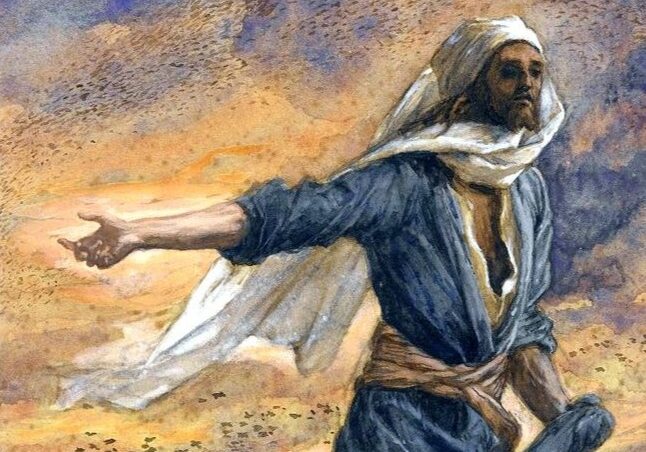
Can you now, along with me, see the soils of Christ’s parable, and their characteristics, beginning to take form as the Sower walks into his fields to scatter the Seed of His Divine Word? – As the Sower digs deep into his sack of seeds, He takes out a full handful. As He walks forward, He scatters the seed indiscriminately in a half-circle motion upon the ground of His fields. He then prays to the ALMIGHTY that it will all take root and grow – some producing thirty – some sixty- and some, even one hundred-fold of precious kingdom fruit.
Now, it was not the Seed that the Sower was praying for, but the soil. The soil would need the necessary characteristics to support and nourish the Seed that it might take root and grow, bearing a harvest for the Sower. The soil, as we have alluded to, is an allegory for the people hearing Christ JESUS’ teaching. And the people would have been an improper soil for Christ’s parables, unless they, as a general and unambiguous prerequisite, believed that “JESUS was the Divine Sower, and His Word the Seed of the Kingdom of GOD. [Their faith must be unequivocal; believing that there was no other Sower than He – no other Seed of the Kingdom than His Word.”4 Depending upon a person’s view of Christ and His Word, that is, his or he positional relationship to the Kingdom of GOD and His Christ, the soil of receptivity could have been, and still will be, affected.
You see, the traditional teaching of the Pharisees, and that of other religious leaders, was that the Messianic Kingdom would come by political and military power, but this was not JESUS’ Kingdom Way. His teaching was that the Kingdom of GOD would come like a harvest – miraculously and wonderfully – by the Spirit – by Truth – and by Life. JESUS, in another place, said, “The kingdom of GOD is as if a man should scatter seed on the ground, and should sleep by night and rise by day, and the seed should sprout and grow; he himself does not know how. For the earth yields crops by itself: first the blade, then the head, after that the full grain in the head” (St. Mark 4, 26-28). – A mighty Messiah of the Pharisees’ making, (if He had come in the way that they were teaching the people), would make Israel ‘great again’ visibly and openly so that the whole Greco-Roman world would see. — The Messiah that the religious class of Israel taught and expected, was going to ride into Jerusalem upon a mighty steed, and as John and James had lobbied, call down fire from Heaven to destroy and drive out the Roman occupiers from the Promised Land of Israel.
Mind you, “that was the very idea of the Kingdom, with which Satan had tempted JESUS at the outset of His ministry.”5 Yet, Satan was put in his place for tempting the LORD with a counterfeit kingdom. Behind JESUS, and ultimately bound and rendered powerless, was Satan made. GOD’s Kingdom, to wit JESUS came to proclaim and offer to those with faith in Him, by His Grace, was, and still is, dependent upon the nature of the relationship of one’s heart to receive the Words of JESUS about His Kingdom – like a seed to soil, after it has been scattered by a sower in his fields.
There is only one Seed of the Word of GOD’s Gospel as divinely revealed in the Holy Bible, but there are several types of soil – four to be exact. And unlike Satan’s facsimile of the real McCoy – “the Kingdom of GOD is within … and given by free Grace. And as such a Kingdom, the Sower sows the Seed of that Kingdom liberally and freely to every tribe, tongue, and nation. – And as you might guess, the Seed, going wide and far without prejudice, might fall on unfavorable soil. – Yes, “the Seed might fall on the roadside, and so perish without even springing up [because the birds of the air find it on impenetrable soil, scooping it up and eating it delightedly. Or it might fall on rocky soil, and so spring up rapidly, but wither before showing promise of fruit because no roots take hold. Or it might fall where thorns grew along with and more rapidly than the seedling. And so, it too would show promise of fruit … because the thorns growing more rapidly would choke the fruit out.”6
There is only one soil of the four that truly receives the Seed of the Sower, allowing it to penetrate its fertile, curious, and desirous heart and mind. That soil is of those who long to know and to be known by GOD. They in themselves are not perfect people, but their hearts are fertile, such that when the Seed of the Word of GOD’s Gospel is planted there, it can be nurtured by the Spirit of GOD, producing thirty, sixty, and even a hundredfold of capacity of the fruit of the Kingdom.
So, let us draw some distinctions to help underscore the mystery of the Kingdom and how it grows in good ripe soil, and not in soil that is trodden down, shallow, or laden with weeds that choke out. – JESUS begins His explanation of the Parable of the Soils and the Seed by pointing out that the Seed, which is the Word of the Gospel of Salvation for all men, falls onto hearts that are compact, and will not receive the Word. JESUS says that this soil represents those “who hear; [but] the devil comes and takes away the word out of their hard hearts, lest they should believe and be saved” (8,12). These are the people who have ears, but will not hear, and who have eyes, but will not see. Just like “the Pharisee at the table: he has invited JESUS to dine, and obviously wants to give Him a hearing, but what JESUS does and says is so unexpected and shocking [to the man’s legalistic tendencies] that he tries to distance himself as far as he can from JESUS. That is, because JESUS accepted repentant tax collectors and sinners into His movement].7 The Word of Christ never even broke the surface of this man’s heart because of his heart’s hardened attitude against Christ’s Gospel.
The next soil JESUS describes is the soil that is shallow and has many rocks mixed in it. Of this heart, JESUS says, “These are those who, when they hear, receive the word with joy, [but they do not allow the Word to take root], so they believe for a while and in time of temptation fall away” (8,13). These are like those disciples who followed JESUS in St. John 6, and who departed from Him after JESUS told them that: “Whoever eats My flesh and drinks My blood has eternal life, and I will raise him up at the last day … For the words that I speak to you are spirit, and they are life” (St. John 6, 54 & 63b). These people received the Word of the Gospel, but the Seed “landed in among the stones of their prejudice, and they would not allow the Spirit’s sacramental grace to get near the Seed to nurture it and allow it to grow in their hearts.”8
Thirdly, JESUS reveals who the people are that have hearts like soil that are infested with weeds. Of these people, the LORD says, these hear the Word, but when the Seed is spread in their hearts, “they go out and are choked with cares, riches, and pleasures of life, bringing no fruit to maturity” (8,14). Such people are like those found in St. Luke 14 who were invited to a great supper, but they each had a stony excuse as to why they could not attend the meal. “The first said … ‘I have bought a piece of ground, and I must go and see it. I ask you to have me excused.’ And another said, ‘I have bought five yoke of oxen, and I am going to test them. I ask you to have me excused.’ Still another said, ‘I have married a wife, and therefore I cannot come’” (St. Luke 14, 18-19). — These folks had other things on their minds than the Kingdom of GOD. For them, it was not fast paced enough, nor pragmatic enough, nor could one ‘strike it rich’ by investing in it. Thus, as JESUS says, the cares and pleasures of life prevent the Seed of the Gospel from growing in these stone-hearted people, who are fruitless and dry.
Only one soil remains of the four, and that is the good soil. Of this soil, JESUS says, when the Seed of the Word of the Gospel falls onto it, and is planted therein, these, because they “heard the Word with a noble and good heart, keep it and bear fruit with endurance” (8,15). — The people with good soil for hearts are those like the Gentile centurion of St. Matthew 8, who “believed that JESUS had the authority to command even serious illness to depart without coming to his house. – Good soil is like Levi the tax collector, leaving his shady business and following JESUS … And here are the Twelve … muddled and puzzled, needing often enough, help, and new direction [to keep them on the narrow path of Christianity, but they persevere in spite of many challenges.]”9 – We see from this last example of the good soil, the key to JESUS description of what makes the good soil, good. I wonder if you caught it? It is that the good soil keeps the Seed, and with endurance, steadfastness, and perseverance, bears Kingdom fruit.
Please note that good soil is not good soil by nature, and it is not good without effort. Surprised? Well, you cannot be good enough to be a Christian. So, if you are waiting around for natural virtue to spring up from your heart and out into your life before you commit to the Seed of the Word of GOD in Christ … well, I hope you have some time to kill. – Good soil comes by the working of it, and we must be about preparing our soil, that is our hearts, for the reception of the Seed of the Sower. We must plow up the packed ground of our stubborn selfishness, throw away the rocks of prejudice and cynicism, and pull up the weeds of naughty, ungodly, enticements to sin. And all of this done, with endurance, perseverance, and steadfastness, while participating in the sacramental life of the Church, a soft, fertile, and rich soil will be endowed in us by GOD’s Spirit, in which the Seed of the Word of the Gospel can grow. – And though we have good soil, we cannot make the Seed grow. It grows mysteriously by the grace of GOD – like seed in a field when men sleep.
Brothers and sisters, what kind of soil characterizes your heart? — If your heart has become hardened, are you willing to do the work, along with the Holy Ghost, to break it up and till it repeatedly until the soil is receptive? Are you willing to dig under the surface of your heart’s life issues and by prayer and fasting, remove the rocks of disappointment, doubt, and despair that would keep the Seed from taking root? How about fertilizing your heart with self-restraint so that the enticements of the world, the flesh, and the devil cannot choke out the Seed planted therein?
One last question, my friends. Are you serious about Christianity and your profession of faith in JESUS Christ as LORD and Savior? If so, are you prepared to tend the Seed of the Word of the Gospel in your hearts with endurance, perseverance, and steadfastness, so that with a noble and good heart, you will, with GOD’s mysterious help, bear Kingdom fruit with patience? – I encourage you, dear church, to take a spiritual account and ask yourselves: “How much mature growth and fruit is the Seed of the Word of GOD producing in my life? – If your answer is, ‘not enough’, then I encourage you in the Name of GOD the Father, GOD the Son, and GOD the Holy Ghost to heed the words of St Peter from his second epistle, chapter one, where he exhorts us to the patient endurance of possessing heart of good soil. St. Peter the Apostle says to Christ’s people: “To those who have obtained like precious faith with us, by the righteousness of our GOD and Savior JESUS Christ, give all diligence [in the tending of the soil of your heart] by adding to your faith virtue, to virtue knowledge, to knowledge self-control, to self-control perseverance, to perseverance godliness, to godliness brotherly kindness, and to brotherly kindness love” (2 Peter 1,1 & 5-7). – Dear St. Mark, the Evangelist. How much Kingdom fruit is being produced in our lives? – If we have ears to hear, we best start using them. Amen.
1 Edersheim, Rev’d Fr. Alfred, The Life and Times of JESUS the Messiah, (Peabody : Hendrickson Publishers, 1993), 399.
2 Edersheim, 402.
3 Edersheim, 403.
4-6 Edersheim, 405.
7-9 Wright, Bishop +N.T., Luke for Everyone, (Louisville : Westminster John Knox Press, 2001), 94.

Join Us for Biblical Worship, Study, & Fellowship
Sundays:
Coffee and Fellowship 8:30 am
Catechesis for all ages 9:00 am
Holy Communion 10:30 am
Recent Sermons

Sixteenth Sunday after Trinity

Worship with Us
Join us for Biblical worship, study, and fellowship. We currently meet in the sanctuary of Christ the King Lutheran Church in Waxahachie.
Catechesis for Adults and Children 5+
Sundays at 9:00 am
The Order of Holy Communion
Sundays at 10:30 am
Fellowship Opportunities
See our calendar for other weekly and special events.