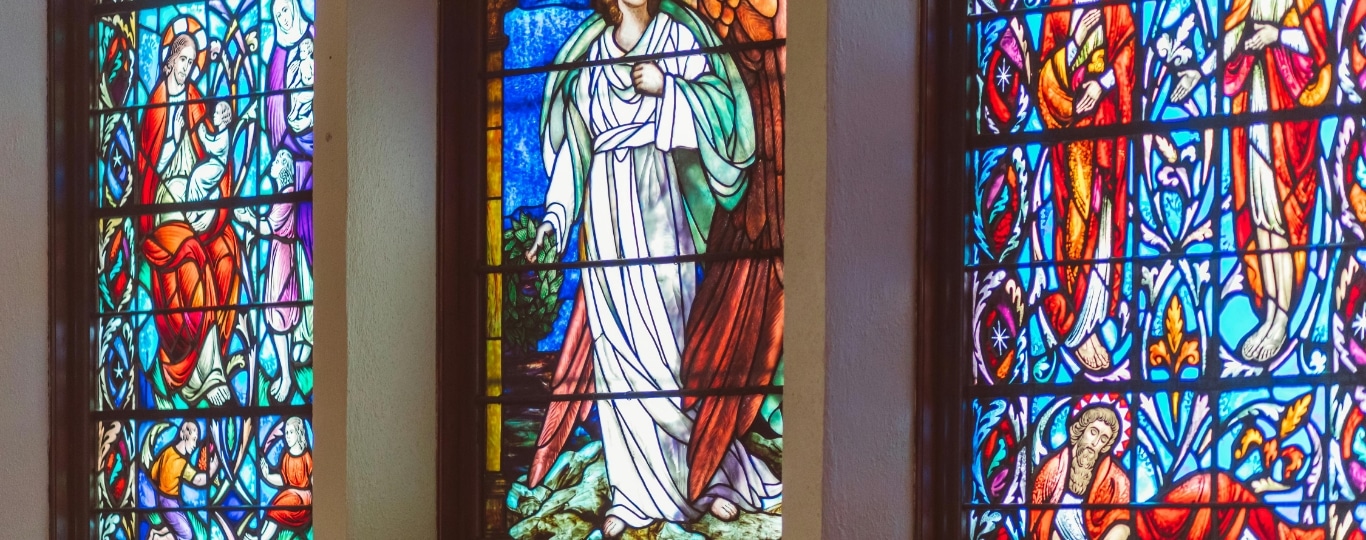
Seventh Sunday after Trinity
†
Unless we take the time to read, mark, learn, and inwardly digest the beautiful symbolic images that we encounter in certain Bible passages, they will sweep right past our ears without squaring with our minds and planting therein the redemptive imagery that GOD intends for them to provoke. For example, in the passage we heard from Hosea, the prophet uses images to communicate GOD’s reviving grace offered unto Israel. YHWH GOD offers redemption if Israel will only turn back to Him, practice true religion, and reject her corporate sin, going forward. We read this in the first few verses that we heard this morning: “O Israel, return unto the LORD thy God; for thou hast fallen by thine iniquity. Take with you, words, and turn to the LORD: say unto him, take away all iniquity, and receive us graciously.” (Now for the picturesque redemptive images) “Take away all iniquity, and receive us graciously, so we will render the calves of our lips. [If done, says the LORD,] I will heal their backsliding, I will love them freely: for mine anger will be turned away from Israel. I will be as the dew unto Israel … and he shall cast forth his roots as Lebanon. His branches shall spread, and his beauty shall be as the olive tree, and his smell as Lebanon … the scent thereof shall be as the wine of Lebanon” (Hosea 14:1-2, 4-7).
Beautiful, isn’t it! — Now, what does it mean? — Recounting a few of the symbols which we just heard, they describe the nature or character of Israel’s redemption, should they return unto GOD. Notable images are: ‘calves of our lips’; ‘as the dew’; ‘cast forth his roots’; ‘branches shall spread’; ‘beauty as the olive tree’; ‘smell of Lebanon’, and ‘smell of the wine of Lebanon’. For today’s purposes, let us discuss the last of these descriptions. For, if we were a resident of the Hebrew Levant of Judea, Samaria, and Galilee in the 8th century B.C., these artistic symbols of language would have shocked our redemptive imaginations starkly awake, because of the powerful imagery they possess.
Before we discuss these terms specifically, and the overall theological intentionality of this passage from Hosea, let us consider the climate and agricultural character of what we hear described in the Old and New Testaments as Palestine; a term synonymous with the Land of Israel – from the Jordan River in the east to the Mediterranean Sea in the west; the land from Beersheba in the south to Dan in the north, including that region called Lebanon. — “Palestine, Canaan, or the Land of Israel, combined every variety of climate, from the snows of Mt. Hermon in Lebanon in the north, to the genial warmth of the pastoral landscapes near the Lake of Galilee, to the tropical heat of the Jordan valley … Within such a small compass, the country was unequalled for charm and variety … So long as GOD’s blessing lasted, Palestine – the Land of Israel – the land of sojourners – enjoyed peace and plenty. Far as the eye could reach, ‘the cattle on a thousand hills’; the pastures ‘clothed with flocks, the valleys also covered over with corn and the lilies of the fields’; and the land, ‘greatly enriched with the river Jordan,’ it all seemed to ‘shout for joy,’ ‘to skip like a rams, ’and ‘also to sing’.”1 Tenuous for its safekeeping and always dependent upon the spiritual endurance in loyalty of the people of Israel, Palestine was Heaven-given at the first and Heaven-guarded throughout. — Thus, with rich symbols of the beauty of the land, we find Hosea words evoking the imagery of our imaginations concerning the redemption of the LORD. Thus, the prophet says: Return O Israel! Turn to the LORD your GOD, that your redemption might be ‘as the smell of Lebanon’ and ‘as the smell of the wine of Lebanon’. — I pray, now, that your redemptive imaginations are stark awake!
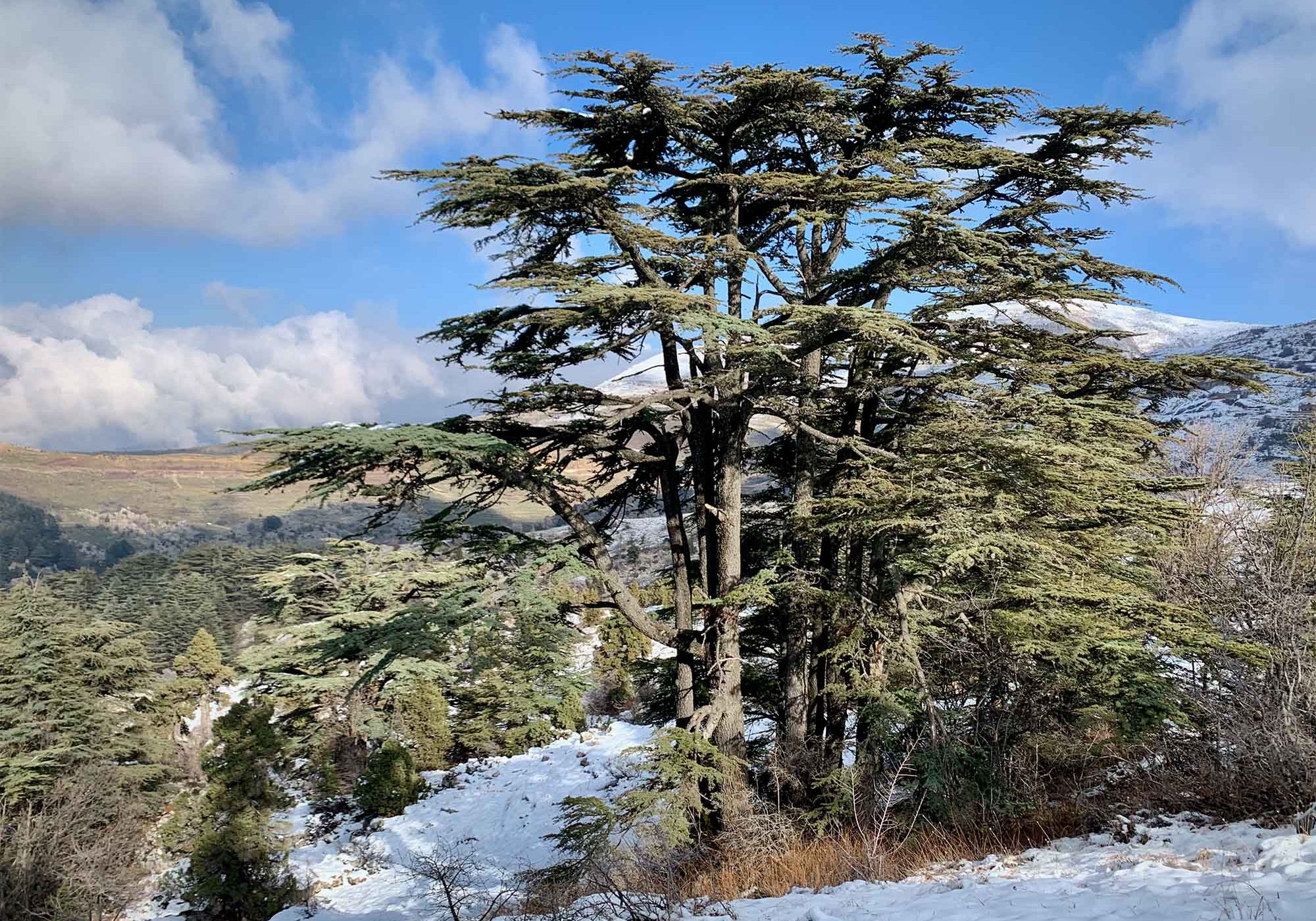
So, let us now consider this image of the particular region in Palestine, called Lebanon. — Lebanon was that far northern territory, partly in Dan, and partly in Syria. Here we find Mt. Hermon, the place where JESUS was transfigured before Peter, James, and John. It was from Lebanon that the robust cedar trees were gathered to build Solomon’s Temple complex. — And as psychologists say, the human sense of smell is one of the most powerful senses to trigger memory. — Thus, with his call to repentance, to turn and return to the LORD your GOD, Hosea brings to Israel an olfactory memory; a perfumed memory that stirred their minds to the towering and sprawling evergreens used to build the House of GOD. Such an image should have conveyed the idea of “divine majesty, fertility, and strength.”2 And being that the House of GOD was constructed of the cedars of Lebanon, Hosea, in his call to repentance, Israel could be sure of YHWH GOD’s gracious and abundant redemption.
“True believers, who are true penitents, are acceptable to GOD and approved of men. GOD smells in them a sweet savor from their spiritual sacrifices; they have a delicate flavor to Him.”3 — A repentant Israel, Hosea is telling us, is “fragrantly full of the favor of GOD, who willing and longingly gives a reviving, fruitful restoration for His people back to the Divine and Holy Presence; without guilt, shame, or blame. A restored covenantal relationship between GOD and His people, is like the flourishing of an evergreen landscape, rich with the aromas of the fine wine produced in Lebanon at the height of the land’s bounty and blessing.
And if you have spent time seeking the LORD GOD ALMIGHTY, and you have encountered Him in the revelation of His Holy Scriptures, as well as through His inward and spiritual Presence in the Sacraments, then you know that His redemptive Grace is not cheap; nor will He cheapen it for any reason. GOD requires His worshippers to lean into Him; for “whosoever will hearken unto the LORD will dwell in safety and shall be quiet from the fear of evil” (Proverbs 1.33). Our spiritual desires and efforts to reach GOD, He must compensate with an outweighed degree of compassion, if we are ever to reach out and touch Him. — He does not require much from us to receive His “good measure, pressed down, shaken together, and running over” (St. Luke 6.38). In His benevolence, He is more than willing to give us a measure more ample than that which we deserve. Yet, aside from His willingness to be our Upholder (as the Psalmist calls Him, our Staff and Support -118.19-), the LORD does demand from us, sincere devotion. Though we could never repay Him the ten thousand talents of our egregious sin-debt, the LORD does require the free exchange of our genuine and heartfelt repentance as a spiritual payment for His compassionate clemency. (cf. Matt. 18.23-35) This, Hosea says, is true religion.
According to GOD’s word, spoken by Hosea, His prophet, true religion is this: ‘O Israel, return unto the LORD thy GOD; for thou hast fallen by thine iniquity. Take with you words, and turn to the LORD: say unto him, take away all iniquity, and receive us graciously.’ — In our pious pursuit for redemption before GOD, “We are required to bring, not sacrifices and offerings (the blood of bulls, heifers and goats), but penitential prayers and supplications of our hearts; viz., the fruit, or if you like, calves of our lips … For without heart, words are but wind to GOD. — One of the storied rabbis has said: ‘Our spoken words to GOD in pursuit of repentance must be such words as proceed from what is spoken first in the inner man; the heart must first dictate to the tongue. When we go to GOD, we must take good words with us; taking good thoughts and good affections to His Throne of Grace. — For words, they are easy to conjure; it is the renouncing of our will to the will of the LORD’s; this is our heart-challenge. Yet, fear not, Horace of pre-Imperial Rome exhorts: ‘Those who master a subject are seldom at a loss for language.'”4 – Let us then master the language of repentance before GOD, for this is our bounden duty; our true religious calling: to master repentant devotion and obedience to GOD – to render, as Hosea says: ‘the calves (viz. the sacrifices) of our lips’ to the Shepherd of our souls, after we have turned from our iniquity.
Yet, as it has been said many times from this pulpit – such is not the natural state of man; not even the Christian man: to master repentant devotion. Thus, our Collect for this Seventh Sunday encourages us, correctly, with the appropriate words we should pray to the Father to assist our devotion in repentance: “LORD of all power and might, who art the author and giver of all good things; Graft in our hearts the love of thy Name…”5 — Biblically speaking, to ‘graft’ is to ‘implant,’ and our prayer is that GOD ALMIGHTY will implant in our hearts that which is not there naturally. “You cannot have a beautiful rose bush in your garden without someone bringing it and planting it there first. Let us acknowledge the truth: the garden of our hearts does not grow spiritual rose bushes by matter of course. Nor with all our religious digging, weeding, and watering could we ever expect to make a beautiful Rose of GOD grow there. Instead, GOD must transplant the Rose out of His Nursery Garden into the repentant and humbled garden of our hearts. At best, our gardens, by our unregenerate nature, can only bring about thorns and thistles – spoiled gourds and wild grapes.”6 — The Rose Bush we desire is the ‘love of GOD’s Name.’
Knowing that we are incapable of growing any good thing in ourselves, and of ourselves, we pray GOD will plant the love of His Name in our hearts, which produces the beautiful buds of our devotion to the lovely symmetry of GOD’s character expressed by His Name. This symmetry of character is known and expressed by GOD’s mercy, graciousness, fatherly kindness, holiness, justice, and truth.”7
Is this all we must do – pray that GOD will implant His Name in our hearts? — It is not, for if we are to keep the true religion that Hosea described, and that which GOD expects of His people (turning, praising, and obeying), then GOD must also nourish us with all goodness. To transplant a rose bush from the nursery of GOD’s storehouse of grace is but the first step in helping us maintain true religion. GOD must also nurture the flowering bush; keeping and protecting it from deadly weeds and predatorial insects. “The thought is this: with all the affection of a parent, GOD will watch over the life which He has implanted in our hearts; shielding it from harm. And if we will but co-operate with His guardianship, all is secure.”8 As we have already noted: “Whosoever will hearken unto the LORD will dwell in safety, and shall be quiet from the fear of evil … For the Name of the LORD is a strong tower; the righteous runneth in and is safe” (Proverbs 1.33; 18.10). — Thus, to master repentant devotion and obedience to GOD, thereby practicing true religion, we must pray that GOD will implant His Name in our hearts and nurture it with all goodness.
Dear Saint Mark’s, let us today respond to GOD’s love for us in Christ by participating in true religion. Let us turn from any known iniquity and confess our need for our Father’s forgiveness. Let us bring words of praise and thanksgiving to Him for His goodness and mercy, and then, let us prudently walk in the righteous ways of the LORD, for in Him, those who were made spiritually fatherless because of their sin and rebellion, find a Father in Him. — “Who is wise, and who shall understand these things? Who is prudent and shall learn these things? The ways of the LORD are right, and the just shall walk in them” (Hosea 14.9). — They shall cast forth their roots in Lebanon; and his smell will be that of Lebanon; his scent thereof shall be that of the wine of Lebanon. For in the Life of GOD is true fruit found. — Friends and brothers, let us return to the LORD our GOD, even though we have stumbled because of our iniquity. — It is He that desires to bring us forth into a place of liberty, because GOD, even our GOD, will have favor unto us. (cf. Ps. 118.20) Amen.
—
1 Edersheim, Rev. Dr. Alfred, Collection: Sketches of Jewish Social Life, The Temple, and Jesus the Messiah, (Kindle Edition, 2019), 14460.
2 BibleHub.org. “Interlinear Lexicon: Lebanon (לְבָנוֹן). Accessed 15 July 2026. https://biblehub.com/hebrew/3844.htm.
3 BlueLetterBible.org. Henry, Matthew. “Commentary: Hosea 14.” Accessed 16 July 2026. https://www.blueletterbible.org/Comm/mhc/Hsa/Hsa_014.cfm?a=876001.
4 BlueLetterBible.org. Henry.
5 1928 Book of Common Prayer, 198.
6-7 Goulburn, D.D., D.C.L., Edward M., The Collects of the Day: An Exposition Critical and Devotional of the Collects Appointed at the Communion, Volume 2, (London: Longmans, Green & Co., 1901), 35.
8. Goulburn, 36.

Join Us for Biblical Worship, Study, & Fellowship
Sundays:
Coffee and Fellowship 8:30 am
Catechesis for all ages 9:00 am
Holy Communion 10:30 am
Recent Sermons
Sixteenth Sunday after Trinity
Worship with Us
Join us for Biblical worship, study, and fellowship. We currently meet in the sanctuary of Christ the King Lutheran Church in Waxahachie.
Catechesis for Adults and Children 5+
Sundays at 9:00 am
The Order of Holy Communion
Sundays at 10:30 am
Fellowship Opportunities
See our calendar for other weekly and special events.