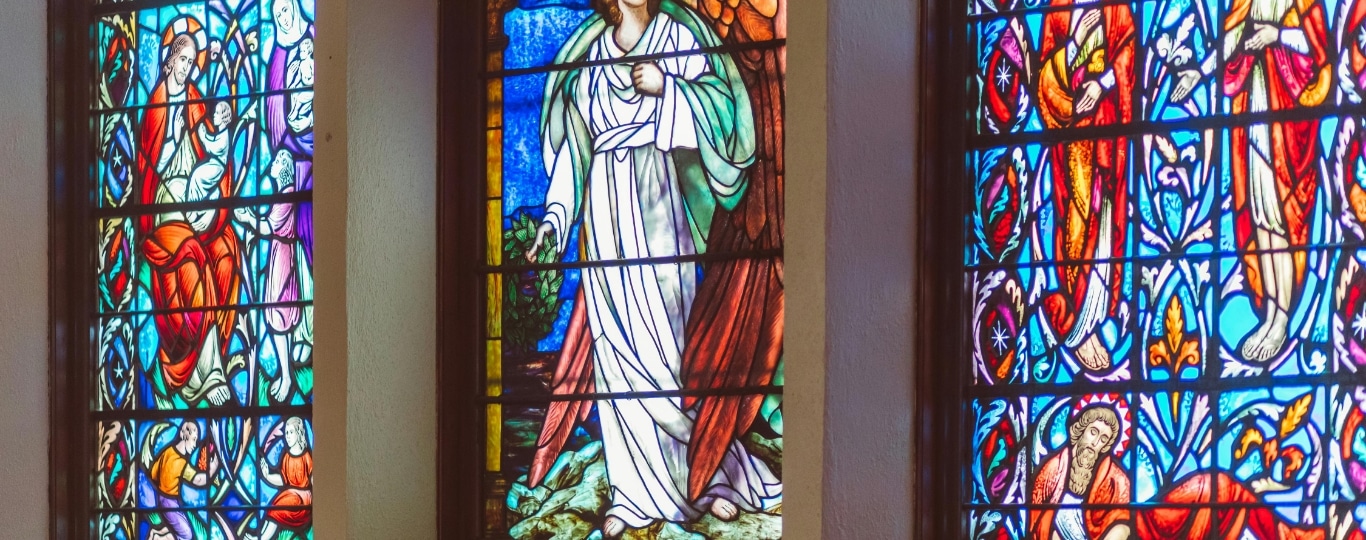
Feast of All Saints Sunday
†
On an episode of Mama’s Family, where Vicky Lawrence plays the character of Mama, her youngest son Vinton provoked a theological conversation within the family. From it, he concludes, “Mama, you do not have to go to church to go to Heaven.” — Mama snaps to attention and looks sternly over her spectacles at the end of her nose and says: “Vinton, you don’t have to jump out of an airplane with a parachute, but it sure does help.” — Funny as the exchange is, it provokes a question worth considering on this feast Day of All Saints. — Is our trust in Christ solely insurance against a hard landing at the end of our mortal lives, or is our faith authentic, evidenced by the fruit we produce for GOD in response to His gracious work in our lives?
A discussion about the fruit of our lives will immediately prove the truth of the question. If we have no fruit, then it is apparent that our relationship with GOD (if we confess Christ as Savior and LORD), is merely transactional, i.e., I do this for GOD and He does this for me. If this is our attitude towards GOD, then we have simply secured an insurance policy, and we are just waiting for impact; the day when we will have to make our claim. And in thoughts of making that claim, this type of Christian hopes he did not overlook some of the ‘fine, divine print’ in the exclusions section.
On the other hand, if our heart’s desire is for an authentic relationship with the Father through the Son, then we must, as Saint Paul said in Philippians 2:12, ‘Work out, in partnership with the Holy Ghost, our salvation, with fear and trembling.’ – If this describes you, then you are the Christian parachuting to earth, well-prepared and working out your descent in partnership with the divine tools and wisdom made available to you from Heaven, fearful and trembling for a soft and safe landing by GOD’s grace. — What attitude of life should then govern our life’s approach to a safe landing?
For guidance on the best way to make that safe descent for the glory of GOD and the edification of our brothers and sisters in Christ, the Collect for this feast day of All Saints provides the following exhortation: ” O ALMIGHTY GOD, who hast knit together thine elect in one communion and fellowship, in the mystical Body of thy Son Christ our LORD; Grant us grace so to follow thy blessed Saints in all virtuous and godly living, that we may come to those unspeakable joys which Thou hast prepared for those who unfeignedly love thee; through JESUS Christ our LORD. Amen.” (1928 BCP, p. 256) — As commended as saints, we must follow those who have gone before us, in virtuous and godly living, not as insurance against destruction and judgment, rather, as Saint Paul says: “that [we] may become blameless and harmless, children of GOD without fault in the midst of a crooked and perverse generation, shining as lights in the world among the unregenerate…” (Philippians 2:15). — Our liturgical prayers of Holy Communion echo a similar sentiment and encouragement in our prayers for the state of Christ’s Church: We say: “And we also bless thy holy Name for all thy servants departed this life in thy faith and fear; beseeching thee to grant them continual growth in thy love and service, and to give us grace so to follow their good examples, that with them we may be partakers of thy heavenly kingdom. Grant this, O Father, for Jesus Christ’s sake, our only Mediator and Advocate. Amen.” (1928 BCP, pp. 74-75)
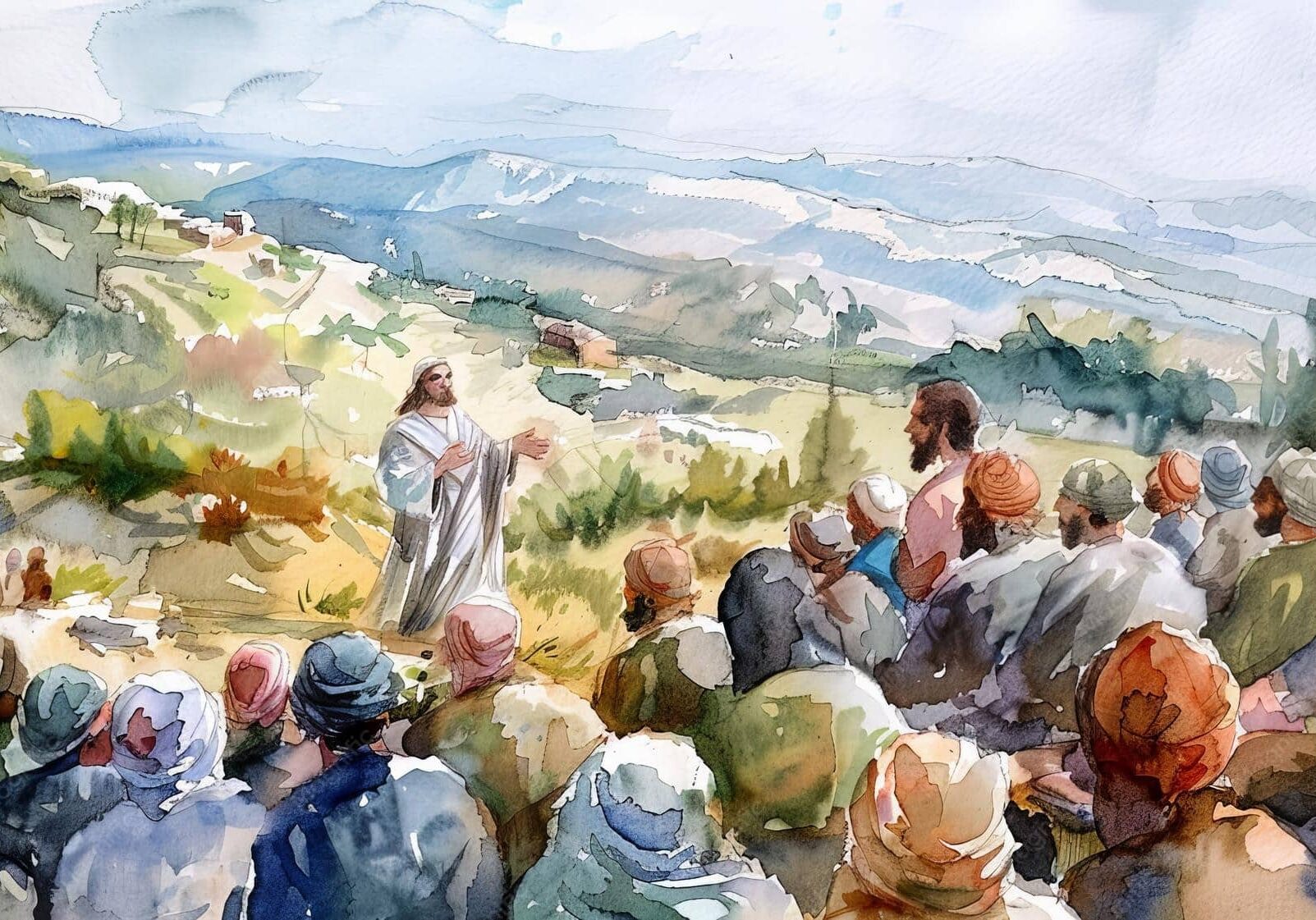
If this is the case of our hearts, and we desire to be part of this Mystical Body of Christ – the Company of all faithful and saintly believers – what is our prescription for success? Or better: what is the Law of Christ that should govern our hearts, minds, souls, and bodies? — Simply put, JESUS’ Laws are the Beatitudes, which we read in today’s Gospel Lesson from Saint Matthew five. — Beatitude” is the descriptive term given to the eight distinguishing characteristics that JESUS proclaims as describing the spiritual character of His followers; i.e., the true Christian working out his/her salvation in partnership with the Holy Ghost, with fear and trembling. — Fear or respect in trembling, because, we know without the Holy Ghost’s assistance, we will not meet all the requirements of Christ’s Gospel Law. — Let’s read these blessed, happy, Gospel Laws again…
The Beatitudes may seem a ‘big ask’ from the Christian man or woman, but remember, the Beatitudes (which mean ‘blessed happiness’), are to be instilled, first in the heart, mind, and soul, and then begotten and lived out in our lives by faith through grace. — Having fallen in love with GOD because of the love He first showed towards us in Christ JESUS, a sincere Christian reciprocates GOD’s love, loving the words and commands of the LORD. This is not difficult when considering that with His Son’s Blood, He bought us, and for our lives JESUS died.’1 – As such, the Christian absorbs the Gospel Laws in his mind, commits them by covenantal faith with his soul, and he activates in his life that which he has committed to by fear and trembling through the assistance of the Holy Ghost. — And why do Christians abide by JESUS’ Gospel Laws? Well, because the GOD and Father of JESUS Christ, whom we love, desires that we do! — Consider this: “For the essence of the whole Bible from beginning to end is that GOD’s historical, present, and future purpose is to call a people together for Himself; that this people be a ‘holy’ people, set apart from the world to belong to Him and to obey Him. And the vocation of that people is to be always true to their God-given identity of being holy and different in all its outlook and behavior.”2 — Saints Moses and Paul put it this way: “For thou art a holy people unto the LORD thy GOD, and the LORD hath chosen thee to be a holy peculiar people unto Himself; above all the nations that are upon the earth … Thus, our Savior, JESUS Christ, gave Himself for us, that He might redeem us from all iniquity, and purify us as a peculiar people, zealous of good works” (Deuteronomy 14:2; Titus 2:14).
Now, the Beatitudes are neither a magic spell, nor are they a replacement for the Ten Commandments; that is the moral law of GOD. Let no one try to convince you otherwise, for JESUS said of the Decalogue: “Think not that I came to destroy the law or the prophets: I am not come to destroy but fulfill [the law]” (Saint Matthew 5:17). Thus, the Beatitudes are a supplement to the Decalogue, of which Martin Luther called ‘mosissimus Moses,’ or Moses quadrupled. For the Beatitudes, Luther said, “is Moses multiplied to the highest degree; it is a Gospel Law of inward righteousness … [and we would be wise to note that], Christ is saying nothing in the [Beatitudes] about how we become Christians, but only about the works and fruit [of Christians. Further], the whole Sermon on the Mount [in which the Beatitudes are contained], presupposes an acceptance of Christ’s Gospel, and they are the result of an experience of conversion and new birth by the indwelling of the Holy Ghost. The Beatitudes describe the kind of people reborn Christians are (or should be). Thus, they set forth the blessings which GOD bestows, not as a reward for merit, but as a gift of grace upon those whom He is working such a character – [through fear and trembling].”3 Again, our fear and trembling as Christians comes as a result of the knowledge that we know we cannot work out the character that the Beatitudes describe, without the requested assistance of the Holy Ghost and without being in the state of God’s grace through faith. — As Reverend John Newton has so eloquently expressed it: “‘Twas grace that taught my heart to fear; And grace my fears relieved; How precious did that grace appear, the hour I first believed.”4
Now, concerning the Beatitudes and their application and implication to the Christian’s life. As one 20th-century theologian has said: “The more we explore the Beatitudes implications, the more seems to be unexplored. Their wealth is inexhaustible. We cannot plumb their depths. In the Beatitudes, ‘truly, we are near Heaven.'”5 — And the reason that we are on the threshold of Heaven when we discuss, meditate upon, and pursue the character of Christianity described in the Beatitudes, it is because they describe what every Christian ought to be. “[For], unlike the gifts of the Holy Spirit, which He distributes to different members of the Christian Body in order to equip them for different kinds of service in the Kingdom, the same Holy Spirit is concerned to work all the Christian graces in the Beatitudes in us all. Thus, there is no escape from us desiring them all.”6 — And since the Beatitudes describe ‘spiritual’ states, we can desire and attain them all. This is important to understand, since JESUS is not describing social or political states of being in the Beatitudes, but, as we said, ‘spiritual’. For example, the ‘poor in spirit’ that the LORD JESUS mentions in Saint Matthew 5:3, theirs is the Kingdom of GOD, not because they are poverty stricken and disenfranchised from the political or welfare state. Rather, the ‘poor in spirit’ are “the pious, who – partly because they are needy, downtrodden, or in other ways afflicted in soul, body, and spirit – they are blessed, because they put their faith in GOD, not man.”7
In essence, the descriptions of the ‘blessed’ and ‘happy’ in the Beatitudes are the reflections, not of how GOD’s people feel, but of what GOD thinks of them – how He sees them – how He relates to them. Thus, the poor in spirit are blessed because theirs is the Kingdom of Heaven; those who mourn in spirit for misappropriated justice – they shall be comforted; the meek in spirit, they shall inherit the earth when Christ returns; the hungry in sprit for the righteousness of GOD – they shall be filled on the Day of our LORD; the spiritually merciful, they too shall experience spiritual mercy; the pure and pious in heart, they will see GOD in the Beatific Vision when they enter GOD’s glory; GOD’s spiritual children, who love Him and their neighbors as themselves, they are blessed because they are called peacemakers; the righteous that are persecuted in spirit, body, and mind, they shall inherit the Kingdom of Heaven as did the prophets who also suffered for their spiritual witness of YHWH GOD’s truth, way, and life.
Rev’d. John Stott, the rector of All Souls Church in London, and the well-read 20th-century theologian, notices this attractive, counter-cultural dichotomy between the Beatitudes of JESUS Christ, and the value system of the world. — The good father, writes: “The world judges the rich to be blessed, not the poor, whether in the material or spiritual spheres; the happy-go-lucky and carefree, not those who take evil so seriously that they mourn over it, are the truly comforted in the world; the strong and the brash, not the meek and gentle; the full not the hungry; those who mind their own business, not those who meddle prayerfully in other men’s matters; those who attain their ends if necessary, by devious means, not the pure in heart who will not compromise their integrity; those who are secure and popular, and live at ease, not those who suffer persecution for righteousness sake; such are the dichotomies between Christ’s Gospel Law and the way of the world.”8
For the true Christian, one who will sail safely to earth with the proper tools of learning, and faith in action as expressed via JESUS’ Beatitudes, he or she must, as the German 20th-century theologian said: “Undergo a transvaluation of his values, if he is going to enter into a relationship with JESUS the Christ.”9
I hope we can press into JESUS Beatitudes a bit further in our next Catechesis subject of interest, for truly, JESUS Christ, who gave Himself for us, that He might redeem us from all iniquity, has purified us to become a peculiar people, zealous for a ‘good and safe landing’, for His sake. Thus, we better become experts in His Beatitudes, just as the Saints before us have done. On this Feast of All Saints Sunday, please know that we are encompassed about with a great cloud of witnesses (whose names, will be remembered at the LORD’s Table momentarily); therefore, let us lay aside every weight and the sin which doth so easily beset us, and let us run [this life of Faith in Christ, as His Church], with patience that the LORD Himself has set before us. (cf. Heb. 12:1-2). And what has the LORD JESUS set before us? — It is His Gospel Law of the Beatitudes. And though you do not need the Beatitudes to travel through this earthly life, IF you are hoping to be knitted together with the Elect Saints of GOD in Holy Communion and Fellowship, thereby receiving the unspeakable joys which the Father has prepared for those who unfeignedly love Him, well, as Mama might have said to Vinton: ‘It sure does not hurt to make the Beatitudes the law, order, and habit of your Christian life.’
Now, may the grace of GOD the Holy Spirit allow you to hear and receive His Holy Word with a meek heart and due reverence, that you might serve GOD, Father, Son, and Holy Ghost in holiness and righteousness all the days of your life. Amen.
—
1 Book of Common Praise, (Newport Beach: Anglican House Media Ministry Inc., 2017), 491.
2 Stott, John R.W., The Message of the Sermon on the Mount, (Downers Grove: InterVarsity Press, 1973), 17.
3 Stott, 37.
4 Book of Common Praise, 565.
5 Stott, 30.
6 Stott, 31.
7 Stott, 32.
8 Stott, 54.
9 Stott, 55.

Join Us for Biblical Worship, Study, & Fellowship
Sundays:
Coffee and Fellowship 8:30 am
Catechesis for all ages 9:00 am
Holy Communion 10:30 am
Recent Sermons

Trinity Twenty-One Sunday

Worship with Us
Join us for Biblical worship, study, and fellowship. We currently meet in the sanctuary of Christ the King Lutheran Church in Waxahachie.
Catechesis for Adults and Children 5+
Sundays at 9:00 am
The Order of Holy Communion
Sundays at 10:30 am
Fellowship Opportunities
See our calendar for other weekly and special events.