St. Timothy School: A commencement address
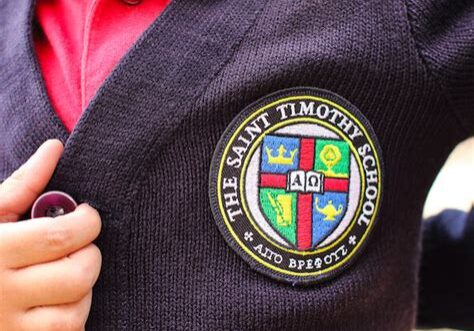
†
“As brothers of the Son of Man, rise up, O men of GOD! Have done with lesser things.”1 – These are the timeless and distinguished words of the hymnist, William Pierson Merrill, which he wrote in 1911. This hymn is typically sung on the occasion of ordinations or for Ember Day celebrations. The latter being the days when the Church prays for GOD to provide her with ministers with hearts for the ministry of reconciliation – reconciliation of man to GOD and man to man. Merrill’s hymn and the 1928 Book of Common Prayer‘s Ember Day prayers are a call – a humble cry to GOD by Holy Mother Church – to inspire a revival by the working of the Holy Ghost – hoping to bring in the day of brotherhood and end the night of wrong.’ That revival occurs, in our context here at the St. Timothy School, every time materiam superbat opus; viz., when the work surpasses the material.
Of course, the opus, or the work under discussion here, is the St. Timothy Student. The material is the collective means utilized to educate to a form, the mind, will, and soul of each student into one who rises to stand alone, as the word ‘student’ originally intended. These young people who rise to stand alone, particularly the St. Timothy School graduate, this materiam superbat opus, are young people who have successfully accomplished the rigors and wonders of classical and manual education, which has been taught, tested, and instilled at this institution of learning by our immensely talented educators. For our mission, successfully achieved, is ‘To endow our children with the tools of learning, and the wisdom of the ages, by nourishing their souls with truth, goodness, and beauty.’ And of those students, those young people who have risen to stand alone, there is but one graduating from our program this 2025-2026 academic year. And here, this evening, we have gathered together to honor the accomplishments that have earned this young man his degree. Tonight, we celebrate the commencement of Mr. Luis Serrano. Young Mr. Serrano, tonight we honor you, and we say to you, Luis, brother, rise up young man of GOD and have done with lesser things.
Before we award Luis his certificate of graduation, it should be stated that The Saint Timothy School believes that every one of her students deserves the chance to receive the rich formation of the Great Tradition of the Liberal Arts. This is why our students are instructed in linguistic arts (Grammar, Logic, Rhetoric), numerical arts (Geometry, Music, Arithmetic, Astronomy), and the mental arts (Philosophy, Theology, History, and the Sciences). When acquired, these arts free the school’s graduates to choose well in life, to continue learning, and to understand the nature of people, relationships, and the creation of GOD around them. In a word, materiam superbat opus; a work that surpasses the material.
Understanding that some of our students, along with their parents, might have different goals than what most families choose when they come to St. Timothy’s, which is our Classical Honors Track, we also offer another program entitled the Vocational Studies Program. It was good of our founders to consider offering these two educational tracks, for both of these offerings have allowed our families to successfully embrace the vision of the school for its students; viz., ‘Let every graduate be a philosopher-craftsman, regardless of future profession.’ — This is exactly what our honoree this evening has done. Mr. Serrano has acquired the knowledge and skills to begin a life as a philosopher-craftsman, to continue learning, and to become a professional auto mechanic. For his senior apprenticeship project required to complete his degree, Luis, with the aid and oversight of a master craftsman, has disassembled and reassembled a Nissan, four-cylinder auto engine. Having thus achieved this task excellently, along with successfully completing his other required subjects, Luis will earn his diploma this evening in the Saint Timothy School’s Vocational Studies Program. — Luis, congratulations, now rise up, young man of GOD! Have done with lesser things!
It was quite wise that Luis’ mother sought education here at The Saint Timothy School for her son, before he pursued a vocation. Classical education, paired with vocational training, has a blessed legacy that has proved fruitful for many families, historically. In the 1500’s in England, all apprentice candidates, who could begin their vocational training as early as nine years of age, began first with an education of not only grammar and mathematics, but also “the acquisition of social habits, the appreciation of nature, and the mastery of several trades.”2 One of the sixteenth century’s most beloved and well-known vocationalists, was a young man named John Frampton, a son of Sommerset, England, who was apprenticed to a Bristol man, a successful clothier. Due to the occurrence of several unfortunate events involving members of the Inquisition as Mr. Frampton travelled the ports of Bristol with cloths to sell in Lisbon, Spain, he was left extremely inconvenienced when imprisoned for suspicions of deviant viewpoints by the Church. After an abbreviated incarceration, young Mr. Frampton achieved his liberty, and he returned to London, where he wrote a series of books called Frampton’s Revenge. These books were meant to instruct young men and their families on the successful processes to follow, if they desired to avoid any such perpetual imprisonments, giving them explicit instructions on how to settle in the New World of the Americas and the Caribbeans.
Mr. Frampton’s “first book, Joyfull Newes out of the newe founde World, described all the beneficial herbs to be found there. The others were a translation from Marco Polo, an account of the Portuguese voyages to the Far East, a translation of a famous Spanish manual of navigation entitled Arte de Navegar, as well as several others … As Mr. Frampton rightly explained, “navigation is as necessary for the mariner as is case, tense, and gender are for the grammarian.’”3 — The point being, it was most probable that, “before he was apprenticed at the age of 15, John Frampton had received at least the early years of a classical grammar school education, either in Wells, where there was a long tradition of teaching of the humanities and grammar at the Cathedral, or in Bristol, where the tradition of grammar teaching extended back for more than a century.”4
Besides the ability to read and write, 16th-century, English apprentices were expected to be able to tend aptly to their master’s accounting books, bills of exchange, as well as be cultured enough to communicate clearly to customers, suppliers, and officers of trade from the county, state, and country. It was well known, at the time, that “The London Goldsmiths’ Company accepted no apprentice ‘without he can read and write,’ the Barber-surgeons demanded Latin, and the professional copyist guild laid it down that any boy unable to read and write should be sent to grammar school ‘unto such time as he have a reasonable capacity for positive grammar.’”5 Further, the 16th-century English adjutant, before being hired by a master craftsman, also participated in Saturday School, where he was taught Nowell’s Catechism in both Latin and English. To further round out the apprentice’s pre-education before his trade assignment, he was to take note of the rector’s or vicar’s sermon each Sunday, delivering his report on the following Monday morning of what was said and learned to his schoolmaster. — Sounds like an interesting custom of potential adoption for the Chapel of the Cross and The Saint Timothy School, doesn’t it?
Upon the completion of his education, the apprentice candidate would typically have his apprenticeship solidified by his father and the master craftsman, both presenting their agreement for the indenture to the Mayor of the town and the Wardens of the particular guilds that were taking young men into their care and craft. Each apprenticeship would last seven to ten years, allowing for the proper training of the adjutant (helper), as well as control over the number of young men entering each trade and protecting “against the competition of cheap labor, as well as ensuring adequate training and the maintenance of standards for each trade … For all of this, and his master’s care and teaching, the young adjutant promised to work diligently and behave soberly; to guard his master’s secrets and his goods; not to frequent gaming houses and not to marry without his master’s consent. — Finally, two suits were to be provided to the apprentice by the master craftsman: one for the LORD’s Day, and the other for working days…”6
A great many 16th-century master craftsmen and professionals would have agreed with the philosophy of Lucas Waghenaer, who was one of the time’s most respected mariners. Concerning his advice to apprentices on “how to attain to the perfect skill and science of navigation, he said: ‘They must observe, memorize, and record for themselves, the various courses, bearings, and soundings their masters employ when leaving or entering port. For that which any man, either young or olde exerciseth, searcheth out and observeth himself, sticketh faster to memory, than that which he learneth from others.”7 Such advice reminds one of Aristotle of the 4th-century B.C., who said: ‘We are what we repeatedly do. Excellence, then, is not an act, but a habit.’ This philosophy was well accepted by the 16th-century apprentice (as it is here at The Saint Timothy School), because this philosophy of excellence is excellently taught and tested. Excellence is habit, not an accident, nor the sole possession of savants, but the continual contemplation of the brave student.
That was then, but what about now? — The contemporary apprenticeship programs do not differ greatly from their ancestral forms. One modern nuance is that ‘apprenticeships’ have adopted a new title: Work-Based-Learning Opportunities. Other than this, the modern master craftsman still desires much of the same of their adjutants; the basic skills in reading, writing, and, depending upon the trade, some level of mastery of mathematics. In other words, the equivalency of a high school education. The objective of the Work-Based-Learning Opportunity is much the same as it was in the sixteenth century, which is to assist the adjutant in gaining skills around “communication, problem-solving, decision making with integrity, leadership, flexibility, and teamwork; all skills that modern employers often refer to as lacking when discussing skill mismatches in the labor market.”8 — Of course, when we think of modern apprenticeships, we should not only think of the benefits flowing downstream to the adjutant or young man or woman assistant. Large corporations, manufacturers, and small to medium-sized businesses also benefit from a well-educated apprentice candidate, as their ancestral master craftsmen did. These organizations are facing a significant future reduction in their workforces due to a large number of retirements on the horizon. This was not a problem back in the 1960’s and 1970’s, because at that time, roughly 50% of young people coming out of high school already had some level of work experience. According to the same research done over this last decade, that number has sunk below 20% and it is still falling. Today, many of our young people are not immediately destined for college for one reason or another. Our youth, “are finishing high school without a job, college enrollment, military enlistment, or other plans at all. Thousands of their peers join their ranks a year later by dropping out of college, and when these young people look for jobs, most of them do so with few workplace skills; a problem that is increasing, not decreasing.”9 Sounds like the need for Apprenticeship Guilds is on the rise!
Considering all that we have said heretofore, the answer for both groups, employer and potential employees, is what we have already discussed – The Saint Timothy School Vocational Studies Program. “Employers are now increasingly recognizing that education alone won’t prepare students for the workplace, so they are calling for high-school apprenticeship programs that reach kids as early as their sophomore year … Current market studies show that about half of successful youth adjutants convert to full-time employees at the places where they do their apprenticeships, while employers typically enjoy a 5%-10% return on their investment in such vocational programs.”10 And through a successful apprenticeship program, as we have here at St. Timothy’s, employers know, like their ancestral master craftsmen in the sixteenth century, they are hiring employees of quality, integrity, and with the appropriate training to be successful in their trade.
And though a newer program offering here at The Saint Timothy School, the Vocational Studies Program is on the cusp of increasing its attractiveness and programmatic offerings to other students who are like-minded to Mr. Luis Serrano; those who would prefer an educational program that produces a positive vocational outcome versus a classical one. Students that enroll in our Vocational Studies Program will not only have the opportunity to practice a trade that might lead to a full-time career in that trade, they will also be exposed to the core disciplines of study that make The Saint Timothy School so unique in the classical school space: The humanities plus the liberal arts, which equal the Trivium and the Quadrivium, all of which is undergirded by Anglican Prayer Book Spirituality and Christian Virtue. — Luis, this is your heritage and the legacy you leave behind for your siblings and your peers here at Saint Timothy’s. Thus, we say again, as a brother of the Son of Man, rise up, O man of GOD! Have done with lesser things! — Congratulations on completing your studies and I pray that your future life and work will honor GOD and be richly rewarding for you and your family. — Remember, you are: materiam superbat opus; a work that surpasses the material.
As for the rest of the St. Timothy students here tonight, you who will be returning later this fall to begin a new school year, you who will rise to stand alone one day also, have a blessed summer holiday. Splash in a puddle, run through a green field, climb a tall tree, swim in a river, take a nap in the shade of an ancient tree, and read a few good classical books. For “Summer days are GOD’s special gift, to make your hearts with joy uplift.”11 — And most of all, honor and love the Triune GOD of the Bible by honoring and loving your parents. For as the son of Sirach has said: “Whoso honors his father makes atonement for his sins; And he that honors his mother is as one that lays up a treasure” (Ecclesiasticus 3.3-4). For you too are destined to be materiam superbat opus.
And until the fall, when we will all meet again to rejoin in the classical conversation of the Western Tradition, where the great men and women of the past have spoken and recorded GOD’s universal truths for these last thousands and thousands of years for our edification, a blessed and holy summer vacation to you all – students, parents, grandparents, teachers, and administrators. — Now, the peace of GOD which passes all understanding, guard your hearts and minds in the knowledge and love of GOD and of His Son JESUS Christ our LORD. And the blessing of GOD ALMIGHTY, Father, Son, and Holy Ghost be amongst you and remain with you always. Amen.
—
1 The Book of Common Praise, “Rise up, O men of GOD,” (Newport Beach: Anglican House Media Ministry Inc., 2017), 283.
2 Vanes, Jean, Education and Apprenticeships in Sixteenth Century Bristol, (Bristol: Bristol Historical Association, 1982), 3.
3 Ibid., 2.
4 Ibid., 3.
5-6 Ibid, 13.
7 Ibid, 26.
8 InternetArchive.org. “Apprenticeship Review: Rethinking Apprenticeships.” Accessed 19 May 2026. https://archive.org/details/ERIC_ED602885/page/n5/mode/1up
9-10 Rhorer, Brad, et al. “Modern Apprenticeship Programs Solve Two Challenges.” Indianapolis Business Journal, 5 Nov. 2021, www.ibj.com/articles/modern-apprenticeship-programs-solve-two-challenges.
11 Faithfulfable.com. “20 Summertime Poems for Kids.” Accessed 21 May 2026. https://faithfulfable.com/summertime-poems-for-students/.

Join Us for Biblical Worship, Study, & Fellowship
Sundays:
Coffee and Fellowship 8:30 am
Catechesis for all ages 9:00 am
Holy Communion 10:30 am
Recent Sermons

Trinity Twenty Sunday

Worship with Us
Join us for Biblical worship, study, and fellowship. We currently meet in the sanctuary of Christ the King Lutheran Church in Waxahachie.
Catechesis for Adults and Children 5+
Sundays at 9:00 am
The Order of Holy Communion
Sundays at 10:30 am
Fellowship Opportunities
See our calendar for other weekly and special events.