Trinity Twenty Sunday
†
Do you remember the last time you lost something important? I do not just mean: ‘I wonder where I put that lovely scarf or ascot tie; the one I love to wear in the fall…?’ — No, I mean you really lost something, like: ‘Where is my Prayer Book! I just set it out last night, so I will be ready to leave for church this morning! — Where is it? Argh!’ — I am sure you, like me, can relate to this very frustrating and common scene quite well. So here is some advice worth considering: “When this happens again, and you are looking for something in your house and cannot find it, but you finally do find it when you’re done with it, do not put it back where you found it. — Put it back where you first looked for it.”1
Today, I would like to show you a pair of glasses that you might have lost, but you did not even know they were lost; perhaps you did not even know that you possessed them. And once I, with the LORD’s assistance, help you find them, it will be up to you as to where you will put them – either in the place you looked for them first, or in another place hard to find after today’s homily. Yet, if you keep them where you can find them again the next time you look for them, you will need only this one pair, and they will help you along in a dynamic way, on your Christian journey of faith, piety, and devotion.
To start, these glasses are not physical frames and lenses, but instead, a worldview to put on when you read the Holy Scriptures. You see, everyone looks at the world through some framework; some lenses for interpreting history, present-day events, and events yet to come. The worldview people adopt affects how they interact with family, friends, associates, the immediate society, and the world writ large. — As you might expect, a person’s worldview affects how they interpret the Bible, as well. Yet, the Bible says that “The LORD your GOD is GOD of gods, and LORD of lords, a great GOD, a mighty, and a terrible GOD, which regardeth not persons, nor taketh bribes” (Deuteronomy 10:17). In other words, GOD has His own worldview, and He does not consult any man on what they think about it – good or ill. The Bible makes the point to say, “As the heavens are higher than the earth, so are GOD’s ways higher than our ways, and His thoughts than our thoughts” (Isaiah 55:9). Thus, if we agree that the Bible is proclaiming a message of salvation to the world, GOD’s particular message, set within a particular history, amongst particular nations and peoples, then His articulation of that salvation message is intentional and not open to mankind’s opinions or preferences. Thus, to understand the Bible and its Divine message, all Christians ought to seek the truth of that message without bringing personal biases or preferred interpretative outcomes to GOD’s biblical message. — That is what we ‘ought’ to do, and yet… And yet, we each still bring our own interpretive lenses to the Scriptures whenever we read them, hear them preached, or have them taught us; lenses that WE think best. — Some might think it unfair to say (but I do not think it is wholly inaccurate), but there seem to be as many different perspectives of any given passage of Holy Scripture as there are pairs of eyes reading that passage of Scripture. — But we just agreed that this is what we ought not to do.
Well, no matter what pair of glasses or worldview you bring to the table, today I would like to offer you another particular pair. This framework is not the most popular perspective, but in my mind, it is the most hopeful, and the most weighty, with evidence for its adoption from the Bible itself. — I shall not give it a title or label, for titles and labels always seem to cheapen a thing – especially a valuable and rare thing. — Yet, we might describe this biblical worldview in such a way that you understand it better, as a possession, and not a perspective or opinion only. I believe this biblical worldview finds its best illustration as the possession that JESUS describes in His parable found in Saint Matthew 13:44. — “Again,” the LORD says, “the Kingdom of Heaven is like unto treasure hid in a field; the which, when a man hath found, he hideth, and for joy thereof goeth and selleth all that he hath, and buyeth that field.” — The Kingdom of Heaven is like a treasure worth all of one’s possessions, because it is greater than any earthly possession that a man could possess. And to know that you have found that possession, you must have the perspective to see it – to know that you have it in your grasp. This is the perspective I would like to give you – a treasure more valuable than any earthly possession – it will allow you to see and grasp the Kingdom of GOD whenever you hear of it. — What could be more valuable than that?
In our Old Testament lesson today, we read from Isaiah 52:1-10. In that text, we heard several names for something in particular: O Zion – O Jerusalem – Daughter of Zion. — Most biblically literate people would read this passage and say that the prophet Isaiah is talking about things happening to the ethnic, political, and religious nation of Israel. And in most cases, that perspective would be accurate, but when we read the Old Testament prophets, Jerusalem, or Zion, or even the name Israel are not always meant to imply the historic nation of Old Testament Israel. — Perhaps this is a new perspective for you; then again, perhaps not. — Well, after the LORD celebrated the Passover in His Blood on the night in which He was betrayed, most biblically literate people, when they hear the Apostles use the terms Zion – Jerusalem – or even Israel, they understand those biblical writers to mean the Church. And in most cases, that perspective would be accurate. — But what if I told you that those terms used in the Old Testament prophets, oftentimes, also applied to the New Testament Church? — A new perspective? – A new worldview?
Well, this is not the place nor the time to conduct a full survey of the Old Testament Prophets to give you exhaustive evidence of this claim. Yet, I can tell you with confidence that those Prophets of GOD, oftentimes, did use the terms Zion, Jerusalem, Judah, and Israel to point out that the historical nation of Israel was in danger of judgment for their religious and moral practices. Yet, when describing the day when the LORD would refresh Israel, Zion, and Jerusalem after His judgment, GOD would have His prophets use the same terms to describe a remnant of His people that He would deliver by the hand of His Messiah, to raise up a spiritual nation of faithful Israelites. — Isaiah, Jeremiah, Ezekiel, Haggai, and Zechariah are rife with such prophecies, but especially Isaiah. — In some cases, the details of those prophets’ prophecies are easy to align with the real-time events of Israel’s history. At other times, though, the prophets describe scenes which cannot be historically traced, and their language tends to be otherworldly; word pictures events that have yet to happen in religious, political, and ethnic Israel’s history. For example, in Isaiah 11:10-12 we read: “In that day, there shall be a Root of Jesse, which shall stand for an Ensign (sign) of the people; to that sign, shall the Gentiles seek: and that Root’s rest shall be glorious. And it shall come to pass in that day, that the LORD shall set His hand again the second time to recover the remnant of His people … And he shall set up His Ensign for the nations, and He shall assemble the outcasts of Israel, and gather together the dispersed of Judah from the four corners of the land.”
In the whole of the narrative of Old Testament Israel, there is only one ingathering of Jews from the four corners of the land, and that is when the tribes of Judah and Benjamin were called back from their captivity in Babylon in the late 5th century B.C. At that time, they rebuilt the Temple and the city of Jerusalem, which Nebuchadnezzar destroyed, per GOD’s command through the prophets Haggai and Zechariah. In fact, the northern tribes of Israel, known as the ‘Ten Lost Tribes of Israel,’ never returned from their captivity in Assyria when conquered in 722 B.C. — And yet, the prophet Isaiah, inspired by the Holy Spirit, says, ‘the LORD shall set His hand again the second time to recover the remnant of His people.’ — To find this ‘second time,’ we must fast forward nearly six hundred years to the Day of Pentecost, fifty days after JESUS’ glorious resurrection. On that day, the Holy Spirit, coming on the Apostles to gift them with tongues of different languages, caused “the multitudes in Jerusalem to come together, because they were confounded, for that every man heard the Apostles speak, each in his own language … Parthians and Medes, and Elamites, and the dwellers in Mesopotamia, and in Judaea, and Cappadocia, in Pontus, and Asia, Phrygia, and Pamphylia, in Egypt, and in the parts of Libya about Cyrene, and strangers of Rome, Jews and proselytes, Cretes and Arabians, they heard them speak in their own tongues the wonderful works of GOD … and the same that was added unto the Christian community that day was about three thousand souls; [men, plus their women and children]” (Acts 2:6,9-11,41).
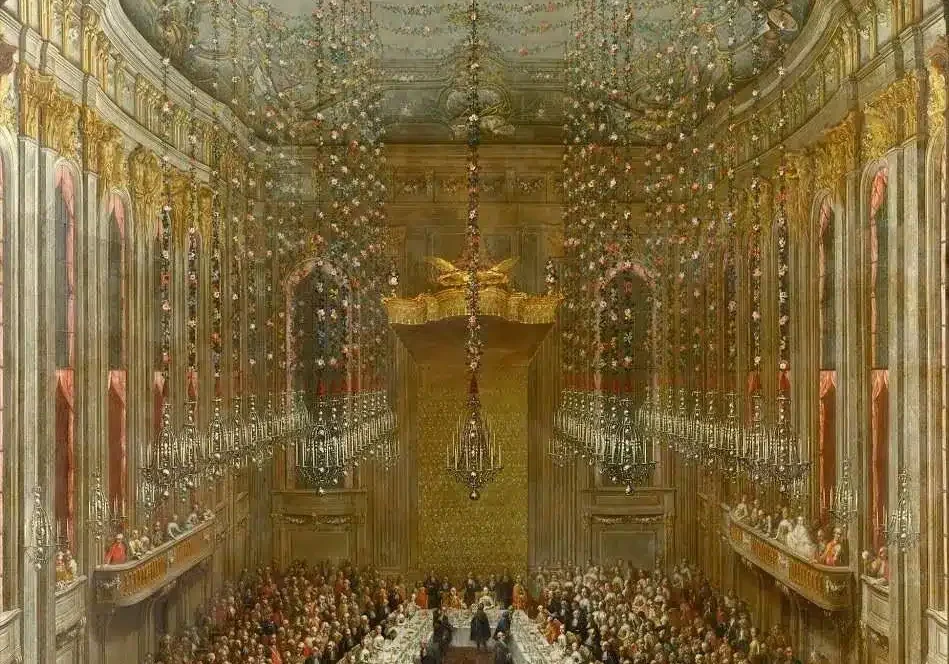
If we are willing to accept it, the second ingathering of Jews happened on the Day of Pentecost, on the day that the Church was born. Thus, in Isaiah 11, the prophet is not talking about political and religious Israel; he is talking about spiritual Israel – the Israel gathered in by the Root of Jesse, the Messiah – JESUS of Nazareth in the first century A.D. Religious and political Israel, that which might be called historical Israel today, rejected JESUS as the Messiah, and by their own testimony, the orthodox among them still await Isaiah’s Root of Jesse, the ensign and sign for the people; the one who will gather in the outcasts of Israel. Yet, in today’s Gospel Lesson from Matthew 22, JESUS says otherwise: the religious Jews in JESUS’ day made light of the King’s invitation to attend the marriage feast of His Son. — JESUS noted that “One went to his farm and another to his merchandise: And the remnant [of the King’s citizens], took the King’s servants, and treated them spitefully, and slew them … So, the King sent His armies, and destroyed those murderers, and burned up their city” (Saint Matthew 22:5-7).
The Jews of Acts 2 did not hold to the same opinion of those religious in Israel that rejected JESUS, and neither did the Jewish Apostles. They believed “that GOD hath made that same JESUS (whom the Jews convinced the Romans to execute), whom they crucified, to be both LORD and Christ” (Acts 2:36); to be the Son of the King, and so they responded to the invitation to the Son’s marriage banquet, by faith. — Further, the Jewish Apostles understood Isaiah’s references to Zion, Jerusalem, and the Israel of GOD to be the spiritual assembly of Christ followers; Jew and Gentile. This Zion, this Daughter of Jerusalem, this ‘remnant of GOD’s people,’ as Isaiah calls us, are those Saint Paul describes in Romans 2:28-29 as made up of Jews, but not Jews ‘which are Jews outwardly; but Jews inwardly. Jews, not through circumcision, which is outward in the flesh, but Jews through circumcision which is inwardly; the circumcision of faith, which is that of the heart, in the spirit, and not in the letter of the Law.’ — As Paul says in another place: “As many of you [that] have been baptized into Christ have put on Christ. There is neither Jew nor Greek, there is neither bond nor free, there is neither male nor female: for ye all are one [spiritually], in Christ JESUS. And if ye be Christ’s, then are ye Abraham’s seed [and offspring], and heirs according to the promise [given by faith]” (Galatians 3:27-29).
Perhaps this perspective sounds new to you, but JESUS did not start a religion for a political and physical nation-state. He did not tell His followers when they should pray and how many times a day. He did not tell them how much money, time, and talent they were to give to His movement if they desired to be holy and religious. — Instead, JESUS created a people and a nation of disciples that believe in Him by faith and obey Him in love. And in following Him, they sell all they have and give to the poor; they turn their cheek if their brother strikes them, and offer the other cheek; when compelled to walk one mile with their neighbor, they go an extra mile, as well; when they see their neighbor in need, they staunch his wounds, bind up his brokenness, and carry him to the inn; and JESUS’ people deny themselves daily, pick up their crosses, and follow Him. Christ’s people do not need rules – it is the last thing we need – we need a King. Thus, Peter calls Christ’s followers a nation whose solidarity and fraternity are not bound up by a sovereign, physical territory and political government, but rather, by bonds of love in the Holy Ghost. — In 1 Peter 2:9-10, he writes: “But ye are a chosen generation, a royal priesthood, an holy nation, a peculiar people, that ye should shew forth the praises of Him who hath called you out of darkness into His marvelous light. For in time past ye were not a people, but ye are now the people of GOD, which had not obtained mercy, but now have obtained mercy.”
It should not surprise us then that the New Testament writers refer to the Church as spiritual Israel, Jerusalem, and Zion. It is not surprising, because the Church is made up of people ‘born again,’ not by the will of man, but by the will and power of GOD, from all nations, tongues, and backgrounds – not one nation, one tongue, and one historical ethnicity. (cf. Jhn. 1:13). As such, the author of Hebrews sees that nation, the Church, coming to the Heavenly Jerusalem, and not a physical, geographical Jerusalem. We read in Hebrews 12:18ff about this spiritual people of Zion, the Daughter of Jerusalem: “For ye are not come unto the mount that can be touched, and that burned with fire (which is Mt. Sinai in Arabia); nor unto blackness, and darkness, and tempest, and the sound of a trumpet, and the voice of words; which Voice, when they that heard it, entreated [Moses] that the word should not be spoken to them anymore … But ye are come unto Mount Zion, and unto the City of the Living GOD, the Heavenly Jerusalem; to an innumerable company of angels; to the general Assembly and Church of the Firstborn (who is Christ JESUS) … to GOD the Judge of all; to the spirits of just men made perfect; and to JESUS the Mediator of the New Covenant, whose blood of sprinkling speaketh better things than that of Able” (Hebrews 12:18-19,22-24).
The New Covenant people, those whom JESUS says must be born again by water and the Holy Spirit, these are the spiritual new creations, having their hearts of stone circumcised in Holy Baptism, and given spiritual hearts of redemption and love – these are the remnant of Israel, the Church, and the Assembly of the Firstborn. These (we) have come to the City of the Living GOD, the Heavenly Jerusalem, because we are the New Jerusalem – the Bride of Christ – the Kingdom of priests – a peculiar people chosen by GOD, whose King is JESUS the Messiah and Risen LORD.
Thus, brothers and sisters, I present unto you your new set of lenses – your new biblical worldview – the hope-filled Messianic worldview of the realized, Heavenly Israel and Church of the New Covenant. With this set of lenses, you will be encouraged and exhorted unto faith and hope by the prophet’s words. Hear them again, with a new perspective: “Awake, awake; put on thy strength, O Zion; put on thy beautiful garments, O Jerusalem, GOD’s holy city … Shake thyself from the (sadness and hopelessness) of the dust; arise and sit down, O Jerusalem: loose thyself from the bands of [sin about] thy neck, O captive Daughter of Zion. For thus says the LORD, ye sold yourselves for nought; and ye shall be redeemed without money … For ye [should] know that ye were not redeemed with corruptible things, as silver and gold … but [ye have been redeemed] with the precious Blood of Christ, as of a lamb without blemish and without spot … being born again, not of corruptible seed, but of incorruptible; by the Word of GOD, which liveth and abideth, forever” (Isaiah 52:1-3; 1 Peter 1:18-19,23).
Awake, awake, put on thy strength, O Zion; put on thy beautiful garments, O Jerusalem, for your King and Savior draweth nigh! — The Messianic lenses of the New Covenant Church perspective; concealed in the Old Testament but revealed in the New. — Where will you put this pair of interpretative lenses? — I hope in the place where you will first look for them the next time you are reading the prophets of the Old Testament.
Now to Him who has caused all Holy Scriptures to be written for our learning, may He grant that we may in such wise hear them, read, mark, learn, and inwardly digest them as He intends for us to do, ever holding fast to the blessed hope of everlasting life that comes only through our Savior JESUS Christ, who lives and rules with the Father and the Holy Ghost, now and forever. Amen.
—
1 Kelly, Kevin, Excellent Advice for Living: Wisdom I Wish I’d Known Earlier, (New York: Viking Books, 2023).

Join Us for Biblical Worship, Study, & Fellowship
Sundays:
Coffee and Fellowship 8:30 am
Catechesis for all ages 9:00 am
Holy Communion 10:30 am
Recent Sermons
Trinity Nineteen Sunday

Worship with Us
Join us for Biblical worship, study, and fellowship. We currently meet in the sanctuary of Christ the King Lutheran Church in Waxahachie.
Catechesis for Adults and Children 5+
Sundays at 9:00 am
The Order of Holy Communion
Sundays at 10:30 am
Fellowship Opportunities
See our calendar for other weekly and special events.