First Sunday after Easter
†
Brothers and sisters of StME, on this first Sunday after Easter, I have a quandary that concerns me greatly! That quandary is familiarity and casualness – casualness in our approach to what the Collect prayer for this Sunday in our Prayer Book says: “ALMIGHTY Father, who hast given thine only Son to die for our sins, and to rise again for our justification…” — Outside of Holy Week, Good Friday, and Easter Sunday, I am concerned that we might take JESUS’ death on the Cross, and His blessed Resurrection, which declare us righteous before GOD, too casually – too informally – too familiarly? — The suffering and death of JESUS on the Cross, and the effect of His death to atone for mankind’s sin is an immense historic event that some try to deny and some casually approach but once a year. But we, dear church, cannot do this. — For if we do, I am afraid, we will permit these historic, salvific events, to become myths and legends here in our community and within our families. But we cannot! We cannot, because there are already too many who do not believe, thinking the Cross and the Empty Tomb are but things foolish and mythological. And if we allow that argument to win the day, then as St. Paul has said, we Christians, of all men, are most pitiable. For, “if Christ is not risen, our faith is futile, [and we are] still in our sins!” (1 Corinthians 15.17).
Yet, even the sharpest among the skeptics and critics cannot leave the events of Christ’s Passion, Crucifixion, and Resurrection alone. The comprehensive record of these events in Holy Scripture, which Christians take on faith and as historical fact, is backed by overwhelming evidence that requires thoughtful contemplation, by all people. With such a witness as this, the Crucifixion and Resurrection of JESUS from Nazareth on the third day, should inspire awe and wonder; not familiarity and casualness. – As we think particularly about JESUS’ Resurrection on this First Sunday after Easter, whether disregard by unbelief, or acceptance by faith, the fact that GOD gave His only-begotten Son to die for our sins, and to rise again on the third day for our justification, is a life-changing concept that must never be cheapened. It cannot be ignored – but some try…
One such skeptic of JESUS’ Resurrection and the entire Christian Faith, was a man of great intellectual and rhetorical capabilities – Mr. Christopher Hitchens. Christopher Hitchens, born in 1949, died of esophageal cancer in 2011, less than a week before the Feast of St. Thomas. Of the Resurrection, Hitchens once quipped: “I think that the indispensable condition of any intellectual liberty, is the realization that there is no such thing … For that which can be asserted without evidence, can be dismissed without evidence.”1 — Yet, evidence is not something the Resurrection event is lacking? — Let’s examine it.
Consider the textual record of the Holy Scriptures, which is the primary source of evidence for the Christian’s claim about the historicity and accuracy of the Resurrection. By general estimates, there are over 8,000 copies of the New Testament in possession of literary critics and scholars worldwide, all of which date from 125 A.D. or earlier. The literary repository of the Resurrection event is far and away the most convincing record of any historical event in ancient history. — In comparison, of Aristotle, there are less than 5 ancient manuscripts existing – of the Roman Caesars, only 5-10 ancient manuscripts, and of other worldwide figures of history, the most we have today are two or less ancient manuscripts verifying their existence – Even with all of this historical, textual evidence, many have their minds being veiled (cf. 2 Cor. 3.12-15) to the historicity of the Bible’s narrative of the Resurrection. That veil has led many progressive critics and biblical scholars to consider the New Testament to date only as early as several generations after the life of JESUS. — Some would even go so far as to say that most of that narrative is nothing more than myths and legends. And Christopher Hitchens, he would agree – Nothing but, “nonsense contained in the pathetic image of ‘the flock”.2 An opium of the masses – an intellectually blind religion.
Yet, “by the twentieth century, however, archeological discoveries had confirmed the accuracy of the New Testament papyri manuscripts to an incredibly early period. These papyri manuscripts (the John Rylands manuscript, AD 130; the Chester Beatty Papyri, AD 155; and the Bodmer Papyri II, ap 200) have bridged the gap between the time of Christ and existing manuscripts to earlier dates … William F. Albright, who was the world’s foremost biblical archeologist, writes: ‘We can already say, emphatically, that there is no longer any solid basis for dating any book of the New Testament after A.D. 80 – this is two full generations before the dates between 130-150 A.D. given by the more radical progressive New Testament critics of today … In my opinion, (Mr. Albright writes), every book of the New Testament was written by a baptized, Christian, between the forties and eighties of the first century A.D.”3 — The critical, literary, and historical record of the Resurrection specifically, and the Gospels generally, is strong – unimpeachable!
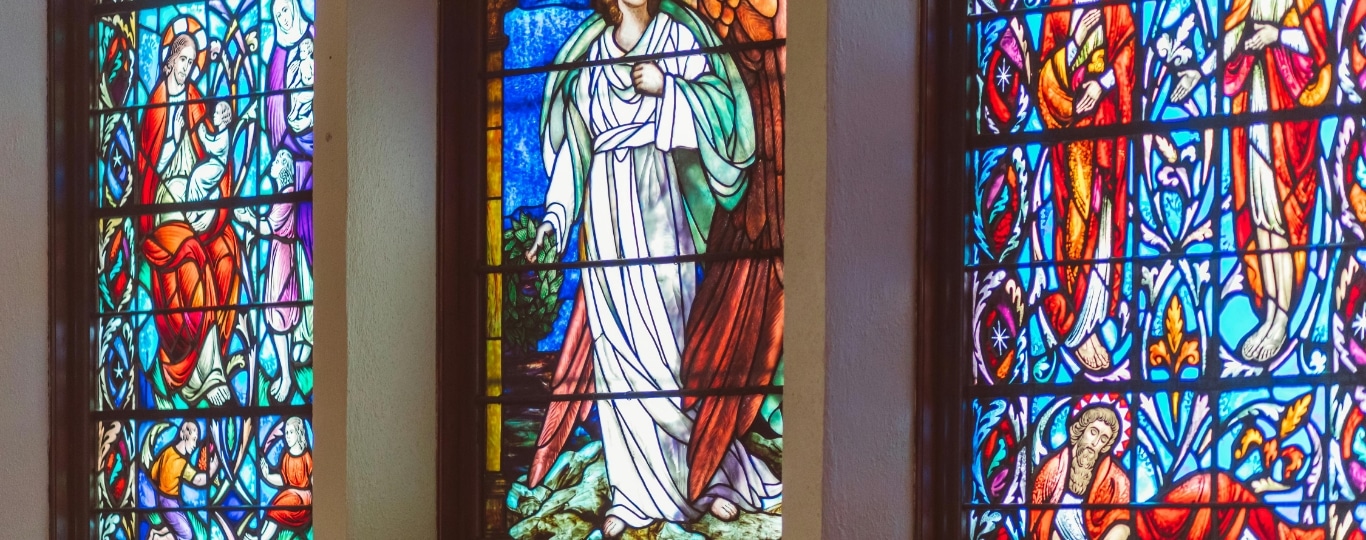
Among the many other witnessing facts that surround the Resurrection of JESUS of Nazareth, there exists an odd one that none would have dared to make up. — In St. Mark’s Gospel account, we read: “Now when the Sabbath was past, Mary Magdalene, Mary the mother of James, and Salome bought spices, that they might come and anoint Him. Very early in the morning, on the first day of the week, they came to the tomb when the sun had risen … But when they looked up, they saw that the stone had been rolled away—for it was very large. And entering the tomb, they saw a young man clothed in a long white robe sitting on the right side; and they were alarmed” (St. Mark 16.1-2, 4-5). The other gospelers record this same event – the women going to JESUS’ tomb early on the third day after JESUS’ Crucifixion to anoint His body according to Jewish custom, only to find the stone rolled away from the mouth of the Tomb, the Tomb empty, and an angel there speaking with them. — And the angel tells the women, “Do not be alarmed. You seek JESUS of Nazareth, who was crucified. He is risen! He is not here. See the place where they laid Him. But go, tell His disciples—and Peter—that He is going before you into Galilee; there you will see Him, as He said to you. So, they went out quickly and fled from the tomb, for they trembled and were amazed.” (St. Mark 16.6-7).
And seeing these things and being commissioned to ‘go’ tell the Apostles that the LORD JESUS was no longer dead, but risen, the women, effectually, became the first evangelists of the Gospel. — Perhaps, nothing strange here to our ears, but to a person of the early centuries in the Middle East and Asia Minor, especially around the first century A.D., to have the witness of a global religion find its moorings in the testimony of a band of women, well, that would have been nonsensical. — Being that ancient societies were patriarchal in nature and custom, these societies held certain biases against women in certain ways. The Jewish society was just this sort of society as well – they did not consider women to be reliable witnesses. The first-hand testimonies of women were not allowed in official court hearings. And yet, GOD had His very first evangelists be the leading women of His movement. — As a point of evidence, if it were not true, the whole of the Resurrection narrative risked futility from the start. Such a provocation of an accepted and standard social norm risked the collapse of the Resurrection’s narrative. If it were not true…
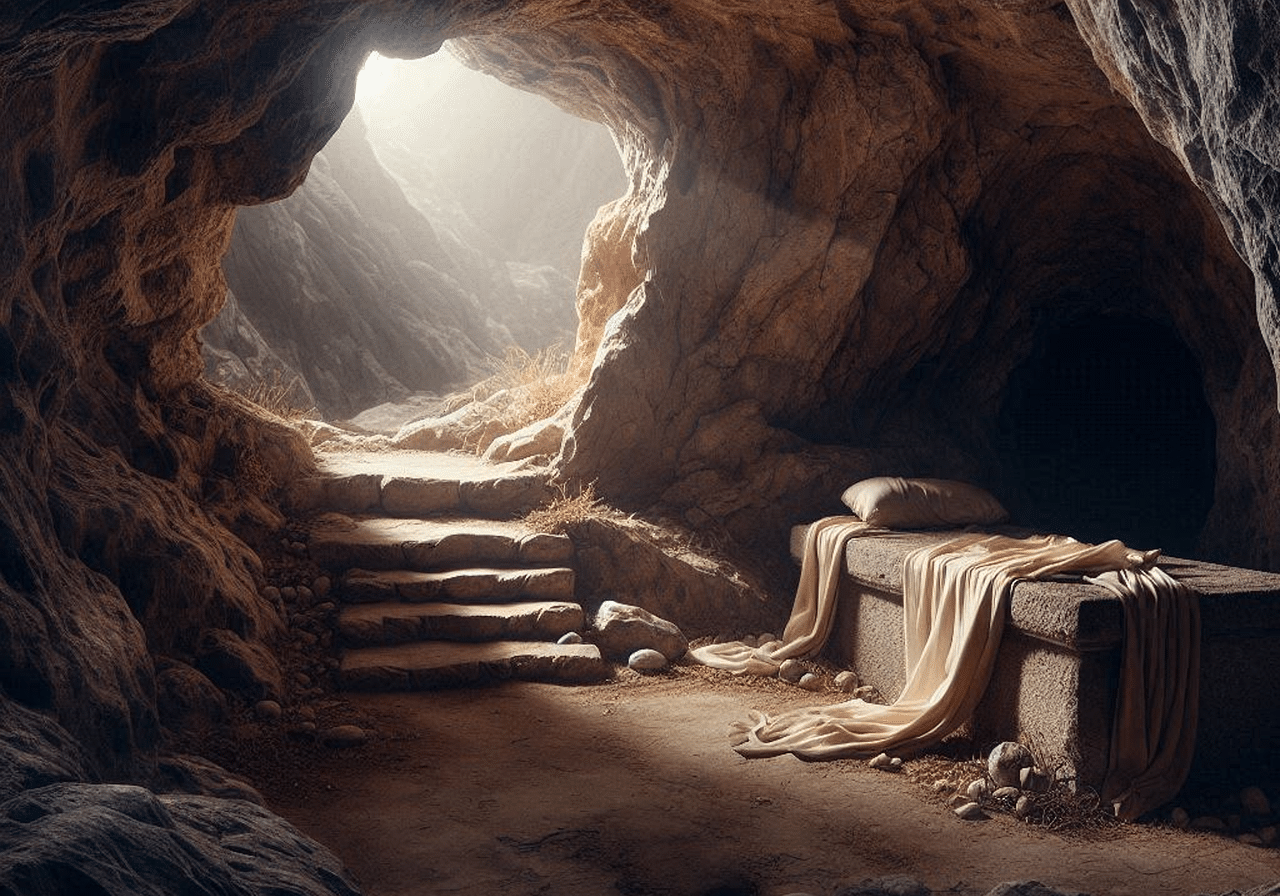
Now what about the Empty Tomb – it holds great revelation for us as well, and plenty of undeniable evidence. — First, when the women and the Apostles arrived at the Tomb, it was open and empty. Well of course, right? But this is a fine detail. — It was open so the women and Apostles could go in and see for themselves that JESUS was not there. — Apparently, it was not opened for JESUS’ sake. We learn later in the Resurrection story, that in His resurrected state, JESUS could appear and disappear, passing through solid walls at will. — Yes, the Tomb was open so Christ’s followers could enter it and believe.
The other unique detail about the open Tomb is the way the stone was placed over the entrance, someone from within could not open it. This detail reveals that it would have had to be opened from without. If JESUS had not been truly dead as a result of His Crucifixion, as some other critics believe, then JESUS could not have opened it alone and escaped. You see, the Tomb was guarded by Roman soldiers at the behest of the religious rulers. Thus, if this idea had merit, the Roman soldiers would have been there when JESUS and His accomplices tried to break Him free from the shut Tomb, thereby preventing the spread of the story that JESUS had risen from the dead. Yet, as the Bible records, the Roman soldiers saw and reported the scene as the gospelers Mark, Matthew, and Luke, all report it.
Finally, let’s ask the obvious: where is JESUS’ body? No one has ever produced the Body of the One that said: “After three days I will rise again” (St. Matthew 27.63). — If the religious leaders had it, revealing it after the third day, this would have authenticated their narrative that JESUS was a deceiver, and not the Son of GOD as He claimed. Yet, they could not produce the Body. — What about the Apostles? Did they steal the Body? According to their testimony, they did not. This testimony is strong, especially considering that almost all the Apostles, and many of the other disciples, were martyred exactly because they claimed JESUS had risen from the grave, bodily — Further, the Roman guards assigned to secure the Tomb, at the risk of their lives, having personally experienced what the Gospels say happened, they testified to the accuracy of the events as we have already said. To prevent the years of struggle with the Christians and the pesky nature of their involvement in Roman society, all the way up to the Christian emperorship of Constantine, all the Romans had to do was produce JESUS’ Body. If they did, it would have instantly squelched the whole Christian movement. Yet, they could not produce the Body either.
These are all finite details, but each important in building a case of evidence for the Resurrection. They all, with many other irrefutable facts, manifest a positive witness for the Resurrection of JESUS of Nazareth, the Christ, from the dead on the third day. — Interesting to be sure, but what, in balance, is the meaning of it all, and what purpose does it hold for us in the 21st-century?
We should not be surprised, either by the disbelief we see in the Scriptures among JESUS’ disciples and critics about the Resurrection, any more than we should be surprised by the disbelief we see today in America or around the world, concerning this miraculous Resurrection event. The women and the Disciples were there, and still could not fathom it. We read throughout the Gospel narratives that the women, Peter, John, and the rest of the Disciples, after hearing about or seeing the evidence concerning JESUS’ Resurrection ‘went away amazed’; ‘wondering to themselves’. — It would be easy to say at this moment, being 2,100 years removed from the event: ‘How could they not believe with all the evidence right in front of them?’
Bishop Nicholas Thomas Wright of the Anglican Church in the U.K. rightly puts it: “In the 1st century AD, ‘resurrection’ was what GOD would do at the end of all time for all the righteous dead, giving new embodiment to everyone from Abraham, Isaac and Jacob down to the most recent righteous martyrs … the Jewish people believed that ‘the resurrection’ itself would be a large-scale global event. After Israel’s great and final suffering, all of GOD’s people would be given new life and new bodies … we should not be surprised, then, at how dumbfounded they were on the first Easter morning. It was not just a lack of faith that stopped them from understanding what JESUS had said in Galilee about his own death and resurrection. It was simply that nobody had ever dreamed that one single living person would be killed stone dead, and then be raised to a new sort of bodily life the other side of the grave, while the rest of the world carried on as before.”6
It was not that these people were simpletons, or that they were from the backwoods, or that they were not enlightened – for goodness sake, they had just spent three years with GOD Incarnate, walking, talking, and living with Him. No, the thing about the Resurrection of JESUS of Nazareth from the dead on the third day, is not that there is not enough clear evidence to bear it out as true. There is plenty of that. — The thing about the Resurrection is that believing that it is true, we must come to terms with our need for JESUS’ Resurrection Life or face the prospects of everlasting death. If we do accept His Life, then we must put our trust in Him as our Savior, LORD, and our GOD. — But, as I express, my quandary is that oftentimes approach this truth, too casually and familiarly. It is entirely within the capacity of our human nature and unregenerate minds, to bear the same casual spirit characterized by Christopher Hitchens’ words. That is, ‘the indispensable condition of human, intellectual liberty, (such that it is concerning good and evil), is the realization by the ‘self’, that there is no GOD, nor sin, nor miracles, nor of any meaningful reason to place one’s hope and faith in the Resurrection of JESUS of Nazareth. In other words, a casual and familiar approach to the Crucifixion and Resurrection, and the Man who claims to be the First Fruits of the Resurrection, JESUS Christ. — Putting into the language of the Apostle Thomas: “Unless I see in His hands the print of the nails, and put my finger into the print of the nails, and put my hand into His side, I will not believe” (St. John 20.25).
St. John, in his Gospel of the life and times of JESUS of Nazareth, summarizes his full record in this way: “These [things] are written that you may believe that JESUS [of Nazareth] is the Christ, the Son of GOD, and that believing you may have life in His name” (St. John 20.31). — The Life, the Way, and the Truth that we each long for, and indeed we were created for, is wrapped up, unlocked, and given through the Person of JESUS the Christ, crucified and raised again on the third day. His Life is found only in His Name and the Words that He spoke. If we want that Life, then we must believe. It is that simple. John said in another place: “And this is the testimony: that GOD has given us eternal life, and this life is in His Son, [JESUS]. He who has the Son has life; he who does not have the Son of GOD does not have life” (1 St. John 5.11-12).
At the end of his earthly life, Christopher Hitchens had become rather good friends with some very notable Christians. One of those notable Christians recalls one of his final conversations with Hitchens before his death from cancer in the following way.
“My mind goes back to the Shenandoah Valley, VA. The skies are clear, the autumn leaves are translucent in the early afternoon sun, and the road ahead is open … In a strong, clear voice, Christopher is reading [about the Resurrection of JESUS from] the Gospel of John.
Christopher, then taking his reading glasses off, turned to me and asked: “Do you believest thou this, Larry?” His sarcasm was evident, but it lacked its customary force.
“I do. But you already knew that I did. The question is, do you believest thou this, Christopher Hitchens?” As if searching for a clever riposte, he hesitates and speaks with unexpected transparency: “I’ll admit that it is not without appeal to a dying man.”7
My question to Hitchens and those like him: ‘Why wait that long – the evidence is overwhelming?’
He who has the Son has life!
Alleluia! The LORD is risen. He is risen indeed! Alleluia! Alleluia! Amen!
1 AZQuotes.com. “Christopher Hitchens’ Quotes about Christianity”. Accessed 21-April 2025. https://www.azquotes.com/author/6756-Christopher_Hitchens/tag/christianity
2 “Christopher Hitchens’ Quotes about Christianity”.
3 McDowell, Josh, More than a Carpenter, (Carol Stream: Tyndal House Publishers Inc., 1988), 64-65.
4 BlueletterBible.org. “Matthew Henry commentary on St. John 20.6-7”. Accessed 23 April 2025. https://www.blueletterbible.org/Comm/mhc/Jhn/Jhn_020.cfm?a=1017007.
5 Edersheim, Rev’d. Alfred, The Life and Times of JESUS of Nazareth, (Peabody: Hendrickson Publishing Co., 2016), 909.
6 Wright, Bishop +N.T., Luke for Everyone, (Louisville : Westminster John Knox Press, 2001), 290.
7 PreachingToday.com. “Christopher Hitchens Considers Christ’s Resurrection”. Accessed 21-April 2025. https://www.preachingtoday.com/illustrations/2016/july/3070416.html.

Join Us for Biblical Worship, Study, & Fellowship
Sundays:
Coffee and Fellowship 8:30 am
Catechesis for all ages 9:00 am
Holy Communion 10:30 am
Recent Sermons

Sixteenth Sunday after Trinity

Worship with Us
Join us for Biblical worship, study, and fellowship. We currently meet in the sanctuary of Christ the King Lutheran Church in Waxahachie.
Catechesis for Adults and Children 5+
Sundays at 9:00 am
The Order of Holy Communion
Sundays at 10:30 am
Fellowship Opportunities
See our calendar for other weekly and special events.