Fourteenth Sunday after Trinity
†
How should we read the Holy Scriptures? I mean, with what lens of interpretation, or to use a fancy seminary word, what hermeneutical style should we use? Undoubtedly, some read the Scriptures well, looking for parables or maxims of wisdom they can apply to their lives to improve their minds, bring virtue to their thoughts, and mold their attitudes and behaviors into a more peaceful and harmonious existence with GOD and their fellow men. For example, if you are like me, I read every day the Proverb that corresponds with the day on the calendar. Today, being the sixth of September, we can find this bit of wisdom from the sixth Proverb: “Go to the ant, you sluggard! Consider her ways and be wise, which, having no captain, overseer or ruler, provides her supplies in the summer, and gathers her food in the harvest. How long wilt thou sleep, O sluggard?” (6.6-9a). — Some good advice, no? — Another way to read the Scriptures is to take in their scale and scope as a novella, finding the wonder and beauty of the stories that are told herein, especially the historical, archeological, and redemptive vision they provide us. The stories found in the Holy Scriptures show YHWH GOD weaving His salvation plan, most interestingly, through the lives of the Patriarchs, the nation of Israel, and ultimately through JESUS the Christ and His Apostles to all the nations of the world through Holy Mother Church. Reading about GOD’s plan of salvation for all mankind throughout history is best enjoyed when we interpret the scenes of GOD’s regenerative grace given, individual by individual, in a way that helps us see that He can and will do the same for us.
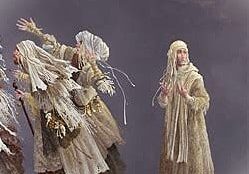
Today’s Gospel Lesson is a case in point. Ten lepers come to JESUS, crying out to Him for His mercy. They all request healing of their dreaded disease that keeps them from family and friends alike. They crave release from being exiles, not only as defined by the Law of Sinai, but also by the norms of the culture in which they live. They hunger for what they cannot provide for themselves: wholeness through redemption. — Being lepers, they were as dead men walking, permitted to have no fellowship with men nor GOD. For not only were they restricted from the local tavern and tent, but the local tabernacle as well. — The beautiful salvation opportunity arises when JESUS is given the opportunity to heal these lepers. If he does so, we would then be able to interpret His act as a true sign of His divinity which He claimed, and we might also see in Him the Divine love He promised to all who came to Him, heavy laden. A Gospel Hope can be born in us if He can and will heal the ten lepers. If He wills it, how much more can he do for you and me? If we interpret His saving act as something accessible for all mankind – those who have faith in Him as Savior – then our aspiration to trust JESUS as our LORD grows stronger.
And as we read, satisfactorily, JESUS does do this thing we yearn for Him to do! He lovingly heals with but a word all ten of the lepers, even an outcast Samaritan, a reprobate in the then Jewish orthodox culture. Thus, we are encouraged by Holy Mother Church to see the power and grace of GOD in Christ through this miracle, and we are led to believe the LORD makes this same power and grace available to us, who also come to Him, weary and heavy laden in this world; desiring release from the disease of sin, which leads to death. For like the lepers, He will refresh us and take our yokes of spiritual burdens upon Himself, giving us His light yoke of mercy and grace to live abundant lives in this world and the world to come. Through such a reading, or interpretation of Saint Luke seventeen as this, we can trust that the LORD will receive us to Himself (once reprobates ourselves), as He did the Samaritan leper.
Yes, both hermeneutical or interpretative styles are good and true, and by each, we can come to many insightful and beneficial conclusions about GOD and His redemptive plan revealed in Holy Scripture. That is, either by looking for wisdom and maxims in the individual texts of the Scripture, or by following each narrative’s warp and woof, which leads to some divinely inspired redemptive conclusion, applicable to us today. — But there is another – another interpretative style. This interpretative, or hermeneutical style, not only sees the wisdom of each moral in the Bible, and follows the unfolding of GOD’s redemptive narrative in specific people, which is also relevant today, but it also understands the Scriptures to be disclosing “a shadow of the good things to come, but not the very image of the things” (Hebrews 10:1). That is, this hermeneutical style understands that the whole of the Bible points to some future, real world, spiritual reality. In the Western Church tradition of interpretation, the Scriptures have a telescoping and forward-looking intentionality, with the Parousia, that great and awesome Day of the LORD, the Second Coming of Christ, in mind. The Scriptures ultimately point us toward the Day when GOD shall dwell with His people and “The kingdoms of this world [will] have become the kingdoms of our LORD and of His Christ; when JESUS shall reign forever and ever. Amen!” (cf. Rev. 11:15). — Either in plain view as a type, or in some form of shadow, practitioners of this type of interpretative style look for a deeper spiritual meaning in the Scriptures. — Practicing this interpretative style, what might be the deeper spiritual meaning in the healing of the ten lepers by JESUS? — First, let us understand the importance of JESUS’ location in the narrative.
Saint Luke tells us that the LORD, on His way to Jerusalem, that temporal city that represents the spiritual City to come, the Church, encounters ten men with leprosy from the area between Samaria and Galilee. These men, as the story communicates later, are both Jew and Gentile. Thus, the problem before us, in the spiritual hermeneutic or interpretative style, understands that the issue facing these men is an issue that affects all people. The issue is leprosy. — From the biological perspective, “leprosy (or Hansen’s disease) is a chronic infectious disease caused by the Mycobacterium leprae, characterized by the formation of growths in the skin, mucous membranes, peripheral nerves, bones, and internal viscera, producing various deformities and mutilations of the human body, and usually terminating in death.”1 Biblically speaking, “Leprosy was a disease which Jews supposed to be inflicted for the punishment of some particular heinous sin, and to be (more than any other disease), a mark of GOD’s displeasure.”2 Yet, even more importantly, leprosy was a spiritual sign of that which casts such a long shadow over a person, their physical state a type of their spiritual state: infected with the disease of sin which leads to spiritual death.
Like sin, leprosy infected the person slowly until it worked its way throughout the entire body, destroying any fruits of feeling and strength in the person’s limbs. Leprosy would take a person’s life by way of infections that develop in the furthest extremities due to burns, cuts, and sores inflicted due to the loss of feeling. Insoluble proteins are deposited in the kidneys, causing their function to be halted. Further, the bacteria that causes leprosy can infect the tissues in the lungs, resulting in tissue collapse and suffocation. Similarly, sin infects the soul from the extremities first, causing a loss of sensibility to the conviction of the Holy Spirit, such that our sinful, fleshly desires, as Saint Paul says, “lusteth against the Spirit … so that you cannot do the things that you would” (Galatians 5.17). In due course, a life lived in sin, first in the extremities, begins to feel the insoluble effects of rebellion against GOD, such that vital organs of resistance in the form of virtues are halted; the infections of hatred, heresies, envying, covetousness, adultery, fornication, uncleanness, lasciviousness, and the like, running their course unto immutable spiritual death. Sin, like the visible signs of a leper’s disease, begins to appear in the sinner’s life as unholy sores and open scabs covering their living existence. — In the end, the man or woman infected with sin, due to its extreme corrupting nature, find that it eats away the healthy pinkness of faith, hope, and charity, until only a precarious grey drab color is left upon the pallor of the sinner’s soul. At this point, they suffocate and die for the lack of GOD’s merciful oxygenation. Thoroughly infected with sin, such people, Saint Paul tells us today, as he has told us in the past, these “shall not inherit the Kingdom of GOD” (Galatians 5.21). — They will die outside the community of Christ – outside the camp, if you will – unclean, exiled, and forgotten; like a rotten tree in a vast forest.
Yet, it is not without hope for the spiritual leper. “GOD anointed JESUS of Nazareth with the Holy Ghost and with power, and He went about doing good, and healing all that were oppressed of the devil; for GOD was with Him” (Acts 10:38). And “JESUS the Christ, who came to take away sin and turn away GOD’s wrath, took particular care to cleanse and transform to wholeness, those lepers that fell in His Way.”3 Particularly because they were spiritual representatives of all mankind. For we all have been spiritual lepers, yes, every one. And like the ten, JESUS will have mercy on our leprosy, if we will cry out to Him: LORD, have mercy upon us, sinners. — Yet, note, it was not until the lepers called upon the LORD in the proper context and in the proper way did He cleanse and transform them. JESUS coming to our minds and the spiritual domains of our hearts through the texts of Holy Scripture, we must call out to Him who we know and believe can heal us. As the lepers in Luke’s narrative, JESUS is attentive to our cries, if they be made in faith. — Close enough to see the LORD and hear His words, the lepers recognized them to be true, and JESUS to be the Life and the Way. We must too! — And having come to their resolved position, they cried out in faith to JESUS, and the LORD heard them: “Go, show yourselves unto the priests” (17.14) — No more powerful thing could JESUS have said to these men without home or country, than if he were to say, ‘na’ar cumi’; that is, ‘young men, be resurrected!’
With His Word, the LORD JESUS Christ commands one to come and another to go. Through His masterful directives, the wind and waves obey His every desire. And at His decree, dead men live again. — The LORD’s presence in the world when He walked us, was itself a type and shadow of that great age to come when “GOD shall wipe away the tears from every eye; and there shall be no more death, neither sorrow, nor crying, neither shall there be any more pain: [for in that time], the former things will have passed away” (Revelation 21.4). At that time, JESUS will say to all: ‘Lazarus, come out!’ — At that time, as the Scriptures point out, all things will be realized, redeemed, and renewed. Until then, we see in the oracles of the Bible types and shadows of how GOD makes every outcast in society fit for relationship with His Father, if they trust in Him. If He can make a Valley of Dry Bones live again, He can give Resurrection Life to all who believe, whether in first-century Israel, or in twenty-first-century Ellis County. Thus, be resolved to be cleansed and made whole today; cry out to the LORD, and He will hear and answer you.
And when He answers, it will not be enough to let GOD do for us what we cannot do for ourselves. We must also, like the Samaritan leper, be the one in ten who turns back to acknowledge Him who gave us our resurrection, the fruit of our faith. — The result of Christ’s power was seen in all ten of the lepers, but only acknowledged by one. — Yes, GOD will “meet us with His mercy when we are found in the way of duty, calling out to Him: ‘LORD, have mercy upon us.’ And after receiving His grace through faith, we are to go and attend upon the instituted ordinances of Holy Mother Church; to pray, to read the Scriptures, to come and receive the blessed Body and Blood. — Yet, the Samaritan leper gives the Church a type and shadow to follow that was commended by our LORD above the other nine. Being healed, he returned to fall and worship at the feet of His redeemer – to render thanks for the benefits he had received of JESUS. — Therefore, brothers and sisters, learning the deeper spiritual meaning of today’s Gospel Lesson, let us not be healed only by GOD, but let us also bear fruits of the wholeness and purification we have received at the will, the word, and the working of JESUS Christ. Let us not be as the nine thankless and forgetful ones who did not return to give glory to GOD. The ideal Christian type has been brought out of the shadows and made known to us today.– “Were there not ten cleansed? Where are the nine?” (17:17). We all, who are Christ’s by faith and Holy Baptism, have been delivered from the putrefying corruption of sin’s leprous character. The Kingdom of GOD has arrived in the Person of JESUS Christ, and is witnessed to the world by the Church. Let us never sway casually away from returning to the LORD GOD, daily, to thank Him for the great benefits we have received at His Hands. This is our role in the world. “For the rhythm of faith and gratitude is simply what being a Christian, in the first century and the twenty-first century, is all about.”4 — Are we thankful??? Then hear the words of JESUS to all who give Him thanks and praise for the good things He has done: ‘Go, which is to say, ‘be resurrected,’ thy faith hath made thee whole.’ (cf. 17:19) — The Word of the LORD: thanks be to GOD. Amen.
—
1 NewAdvent.org. “Catholic Encyclopedia: Leprosy.” Accessed 4 September 2026. https://www.newadvent.org/cathen/09182a.htm.
2-3 BlueLetterBible.org. Henry, Matthew. “Commentary on St. Luke 17.” Accessed 4 September 2026.
4 Wright, Bishop N.T., Luke for Everyone, (Louisville: Westminster John Knox Press, 2001), 206.

Join Us for Biblical Worship, Study, & Fellowship
Sundays:
Coffee and Fellowship 8:30 am
Catechesis for all ages 9:00 am
Holy Communion 10:30 am
Recent Sermons

Trinity Twenty Sunday
Worship with Us
Join us for Biblical worship, study, and fellowship. We currently meet in the sanctuary of Christ the King Lutheran Church in Waxahachie.
Catechesis for Adults and Children 5+
Sundays at 9:00 am
The Order of Holy Communion
Sundays at 10:30 am
Fellowship Opportunities
See our calendar for other weekly and special events.