Third Sunday in Advent
†
Today’s Collect for the 3rd Sunday in Advent makes a most thoughtful statement concerning Christ’s second advent & our acceptability before GOD. Here is that prayer: “O LORD JESUS Christ, who at Thy first coming, didst send thy messenger to prepare Thy way before Thee; Grant that the ministers and stewards of Thy mysteries may likewise so prepare and make ready Thy way, by turning the hearts of the disobedient to the wisdom of the just; that at thy second coming to judge the world, we may be found an acceptable people in thy sight…”1 – Our redemption from sin comes through grace, by faith, in the work the LORD JESUS Christ has done on the Cross. This is a first, Christian principle! — As citizens of the Kingdom of GOD, we who were once strangers & foreigners, who once were far off, but now have been brought close by the Blood of Christ (cf. Eph. 2.13), must show ourselves worthy of the saving grace we have received through our actions, words, and thoughts. The evidence of our acceptability, as the Collect says, is our work, together, to ‘turn the hearts of the disobedient to the wisdom of the just’ (expressed), without being offended by Christ (implied), before the day of Christ’s Second Coming.
Oftentimes, the prayer book takes this position of reminding us that a response to the Gospel of GOD in Christ JESUS, is not requested, but required. In the Great Commission, the Church is commanded to make every effort to reach out to others with GOD’s News – that is, the GOOD News that we have received concerning salvation from sin. Further, we are to tell people that GOD’s News and His gift of soul-salvation is free of charge but does require a person to purchase it by faith. — Hear again what we read in Isaiah 55 this past Sunday concerning this truth: “Ho! Everyone who thirsts, come to the waters; and you who have no money, come, buy and eat. Yes, come, buy wine and milk without money and without price … Seek the LORD while He may be found, call upon Him while He is near. Let the wicked forsake his way, and the unrighteous man his thoughts; let him return to the LORD, and He will have mercy on him; and to our God, for He will abundantly pardon” (Isaiah 55.1, 6-7). This invitation is for all mankind, and GOD requires nothing but a living faith, stirred up by hope, as the means to purchase His divine milk and wine of redemption. — And this again is our charge, St. Mark’s: To turn to the hearts of the disobedient to this wisdom of the Just. To go and make disciples, teaching them everything JESUS has and is teaching us. — The challenge, dear brothers and sisters, as we learn from today’s Gospel Lesson, is for The Church to fulfill this heavenly charge without offense.
Some folks think that their only duty after becoming a Christian is to go to church on Sundays and the major Feast Days, giving only an offering to the LORD of what they can afford from the storehouse of their busy lives, in time, talent, and treasure. — Putting your hope and faith in JESUS Christ and ‘being brought near to His Kingdom,’ is these things, but it is also so much more! — Becoming a Christian by faith and buying GOD’s redemptive wine and milk without money and without price, is also about participating in the reconciliation of the world through the Gospel. — To this point, St. Paul says to the church in Corinth: “Now all things are of GOD, who has reconciled us to Himself through JESUS Christ, and He has given us the ministry of reconciliation” (2 Corinthians 5,18 & 19b). — And to stress this point, the liturgical colors change from purple to rose on this Third Sunday in Advent, to show us that something significant is being communicated, but what?
The Reverend Percy Dearmer, an Anglican Priest of the late 19th and early 20th centuries, said this about the liturgical colors of the different seasons in the Christian Calendar. “[Services of particular meaning] should be distinguished by their traditional variation in ornaments – as the psychologist knows so well, variation lies at the heart of attention, and thus should be addressed with all fervor and care in Divine Worship, according to the season.”2 This is exactly what is happening in the presentation of the color ‘rose’ on this Third Sunday in Advent. — This Sunday is informally known as Gaudete Sunday, or Rejoice Sunday, and reminds us that while we are yet in the crucible of the world (being in it, but not of it), we are to rejoice, glory, and boast in Christ’s imminent, second, redemptive return. The ‘rose’ color is to slap us awake, shaking us free of any spiritual doldrums we might be experiencing as we wait, prepare, and hope for Christ. Not understanding how or when Christ will return, oftentimes deters our focus from our mission to turn the hearts of the disobedient to the wisdom of the Just. This deterrence is oftentimes expressed in the spiritual characteristic of offense at Christ.
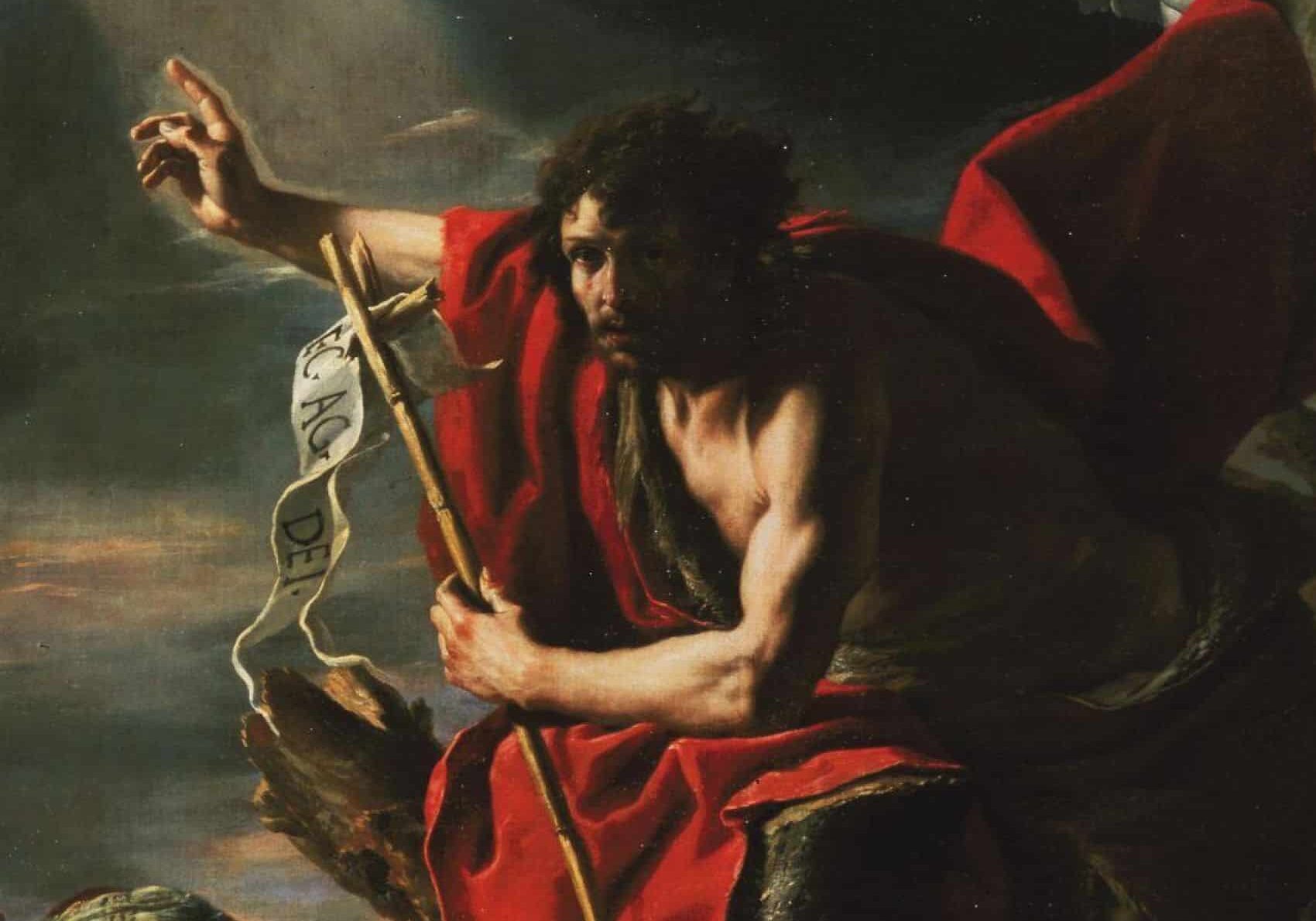
In the Holy Scriptures, the idea of offensiveness comes from the Greek word (σκανδαλίζω), which means to be offended by someone. And to be offended by someone was understood to mean that the offense would cause his followers to desert that person and all he stood for. For example, in St. John 6, many were offended at JESUS because He required that His followers eat His flesh and drink His Blood if they were to have any ‘soul life’ in them. (cf. Jhn. 6,66) — Also, the people of Galilee were offended by JESUS because they knew His parents and siblings, and thus His claims to have come from Heaven to teach His Father’s words and do His Father’s work was σκανδαλίζω to them. (cf. Mark 6,3) — Even John the Baptist and his disciples, being impatient and misunderstanding the timing and process of the unveiling inauguration of the Kingdom that JESUS had come to bring, were beginning to feel offended at Him and thus asked: “Are you the Coming One, or do we look for another?” (St. Matthew 11.3).
John was in prison at this time, having himself offended Herod the Tetrarch, who confined him to the hardship of prison for condemning Herod for immorality for marrying his brother’s wife. In his confinement, John had sent some of his disciples to JESUS to query Him about the timing and reality of His Kingdom. John the Baptist’s faith in JESUS as the Messiah was not in doubt here, for we know that he had made the good confession in the wilderness, on Jordan’s Bank, saying: “Then cleansed be every breast from sin; make straight the way of GOD within. And let each heart prepare a home, where such a mighty Guest may come.”3 “For this is He whom I said, ‘After me comes a Man who is preferred before me, for He was before me’” (St. John 1.30). — Yet, John was growing offended at JESUS because he was confused about His Kingdom. — Was it not to be a Kingdom of power that would push out the Gentiles and their cronies, so that Israel would regain her inheritance in the land as GOD’s chosen people? Was His Kingdom not to come promptly and mightily with the rich and glorious Divine Presence of YHWH GOD, thereby allowing His chosen people to live in eternal peace and freedom from persecution from the nations? Should not His Kingdom set its champion forerunner free from captivity, freeing him from the injustice of the bonds of the secular state?
How oft, my brothers and sisters, in our pursuit of the Kingdom, do we mistake it for something it is not, or for a time, when it is not, and then become offended at JESUS? We rightly believe that the Kingdom of GOD has come when the LORD gives us a child after many years of infertility or a job after months of unemployment. And just at that time, tribulation sets in, and we experience an imprisonment of our hope by the confusion of the circumstances that soon afterwards follow. — In that hour, we receive word from the doctor that the baby is stricken with malformation and will be born with Down Syndrome. Or, just after settling into our new career position, having moved to a new town, in a new state, away from our family, our new employer has declared bankruptcy, and our spouse of thirty years has been diagnosed with terminal cancer. — These are some true circumstances that I have encountered, pastorally, with real people in real families, to which each person in the family was offended by the circumstances and by the LORD, asking Him, honestly: ‘Are you the Coming One, or do we look for another?’
GOD’s thoughts are higher than our thoughts, and as such, we are most often without His foresight in omniscience, oftentimes growing offended by the slowness and bewildering nature of His Word and His Kingdom. And being confused by GOD’s timing and purposes, our circumstances can imprison and suffocate us – squeezing us in, as if ‘the walls of life’ were closing on us with certain dooming consequences, circumstantially, economically, relationally, and emotionally. As a result, spiritual panic sets in, and we grow offended at GOD and His Christ. We ask, ‘Are you not the Coming One – the Savior – my LORD?’ — Being our Great High Priest, JESUS is not without sympathy for us in these matters and at these times. Having been tempted in every way as we are, yet without sin, the LORD encourages us to expect moments like this, yet to be sustained in our faith and trust in the reliability of His Word and Kingdom.
This is a difficult spiritual lesson and task to accomplish, especially if the situation, and not the Word of Christ and His Kingdom, is our guide. If we look at the situation, instead of the promises of JESUS’ Word, we will not put down roots of faith and trust into the deep, nutritious soil of the reliability of GOD’s faithfulness. If we do this, we are likened to the soil that is stony and without much depth of earth in JESUS’ parable about the Sower and the Seed. (cf. Mark 4.1-17) The heat of oppression and adversity, finding us without root and source of spiritual nutrition, causes the hope of the seed, the Word of GOD, to become offensive to us, and to shrivel away.
This was John’s situation as well. Persecution and affliction had come his way because of his testimony for the Word of JESUS’ coming Kingdom. But because JESUS was not acting the way John the Baptist thought he should as Israel’s Messiah, John’s faith was offended, and his roots were not deep enough for the strain of the heat and dryness set upon him by Herod. He was in danger of σκανδαλίζω.
Yet, dear friends of GOD, JESUS promised never to leave us nor forsake us. And even though the Romans were occupying and disrupting faithful Israel’s absolute political and military sovereignty in the land, the Messiah, the Anointed One of GOD, was walking in her midst, doing the things that the prophets said He would do. He was doing things, (as He does by the power of His Holy Spirit in our day), not as a mighty, secular leader might do them – but instead, JESUS moved and ministered among them as the ‘Wounded Healer’ and ‘Suffering Servant’, just as the Word of GOD said He would.
This, I believe, is where most of humanity becomes offended at JESUS. — Israel then, and the world now, does not need a political or military leader to lead us from our sufferings and spiritual setbacks. — Instead, we need a Savior who understands our heartaches, troubles, and adversities. — We need a Healer of our souls who can understand our sorrows and has felt our bruises due to rejection caused by sin and mankind’s failures. — We have that Person in JESUS of Nazareth, who answers us all, speaking to John through his messengers, with very different words than we might be expecting. The LORD said: “Go and tell John the things which you hear and see: The blind see and the lame walk; the lepers are cleansed and the deaf hear; the dead are raised, and the poor have the gospel preached to them. And blessed is he that is not σκανδαλίζω/offended because of me” (St. Matthew 11,4-6).
“Throughout Isaiah, we find prophecies of the impending Messianic Age, when GOD would bring healing into the hurting world of men and women. Among the events foreseen in those writings are the dead coming to life (Isa 26:19), the blind and deaf seeing and hearing again (Isa 29:18;35:5; 42:18), the lame leaping for joy (Isa 35:6), and the poor hearing the glad tidings of the LORD delivered by his anointed one (Isa 61:1). Assuming that John picked up on these allusions to the prophets of old, he must have understood JESUS’ answer loud and clear. — He was affirming John’s faith in JESUS’ messianic identity, and even more, he was strengthening the Baptist’s trust during his time of trial, by grounding it in the Word of GOD. Everything as it relates to mankind’s salvation was proceeding according to GOD’s plan as envisioned by Isaiah.”4 This is the challenge for us today, too, dear church. We are also to ground ourselves in GOD’s Word, trusting Him in our every circumstance, asking Him to open our eyes, unstop our ears, and give strength and capacity to our limbs of faith, that we might trust Him when the wheels fly off, and things in His Kingdom do not seem to be going the way we hoped, planned, or prayed for. We are to put down deep roots of faith to avoid offense, for tribulations will come, and GOD’s thoughts, timing, and purposes are beyond our control, and many times beyond our understanding. — And in so believing, we will be like the ransomed of the LORD in Isaiah 35.10 who do not grow offended by the Messiah: Those who remain steadfast and do not fail in their faith’s endurance, these “come to Zion with singing, with everlasting joy on their heads. They obtain joy and gladness, [and in their circumstances], sorrow and sighing flee away.” This, my dear friends, is the wisdom of the Just, to wit, we are to proclaim to the hearts of the disobedient.
On the Third Sunday in Advent, the Church breaks from purposeful repentance and preparation, to participate in what is appropriately called ‘Gaudete Sunday’, or ‘Rejoicing Sunday’. This is symbolized as we move from the color purple to the color rose. We do so, for the Church knows that variation lies at the heart of attention, and that attention is to call us to the certain hope of Christ’s imminent return. And with this rejoicing in hope of Christ’s reliability, we are called upon, by our LORD, not to become offended by the slowness of His coming, as some consider slowness. Instead, we are to ‘gaudete’ – to rejoice – as we know and believe He will return, for thus JESUS promised – this is our Advent Hope.
Thus, I ask you, brothers & sisters of StME, what is left for us but to be faithful to this ministry of reconciliation to which GOD has called us to perform on this Third Sunday in Advent, with rejoicing? Let us, therefore, make every effort this Adventide to turn the hearts of the disobedient to the wisdom of the Just – as our hearts have been turned, and are being turned.
The liturgical color of rose – it reminds us to rejoice in the invitation ‘to come and buy without money’ – ‘to come and eat and drink without price.’ This is the wisdom of the Just One, JESUS Christ. As He has reconciled us to this wisdom, let us go now and reconcile others as we have been commanded. And then, dear St. Mark’s, our response will be sure, and we will be found an acceptable people in JESUS’ sight at the Day of His return. Amen.
11928 Book of Common Prayer, 93.
2 Dearmer, Rev’d. Percival, The Art of Public Worship, (London: A.R. Mowbray & Co. Ltd., 1920), 103-4.
3Book of Common Praise, “On Jordan’s Bank the Baptist’s cry,” (Newport: Anglican House Media Ministry Inc., 2019), 17.
4 Mitch, C., & Sri, E., The Gospel of Matthew, (Grand Rapids, MI: Baker Academic, 2010), 152.

Join Us for Biblical Worship, Study, & Fellowship
Sundays:
Morning Prayer 9:45 am
Coffee & Catechesis 10:30 am
Holy Communion 12:00 pm
Thursdays:
Holy Communion 6:00 pm
Recent Sermons

Second Sunday in Lent
Worship with Us
Join us for Biblical worship, study, and fellowship. We currently meet in the sanctuary of Christ the King Lutheran Church in Waxahachie.
Catechesis for Adults and Children 5+
Sundays at 9:00 am
The Order of Holy Communion
Sundays at 10:30 am
Fellowship Opportunities
See our calendar for other weekly and special events.