Trinity Nine Sunday
†
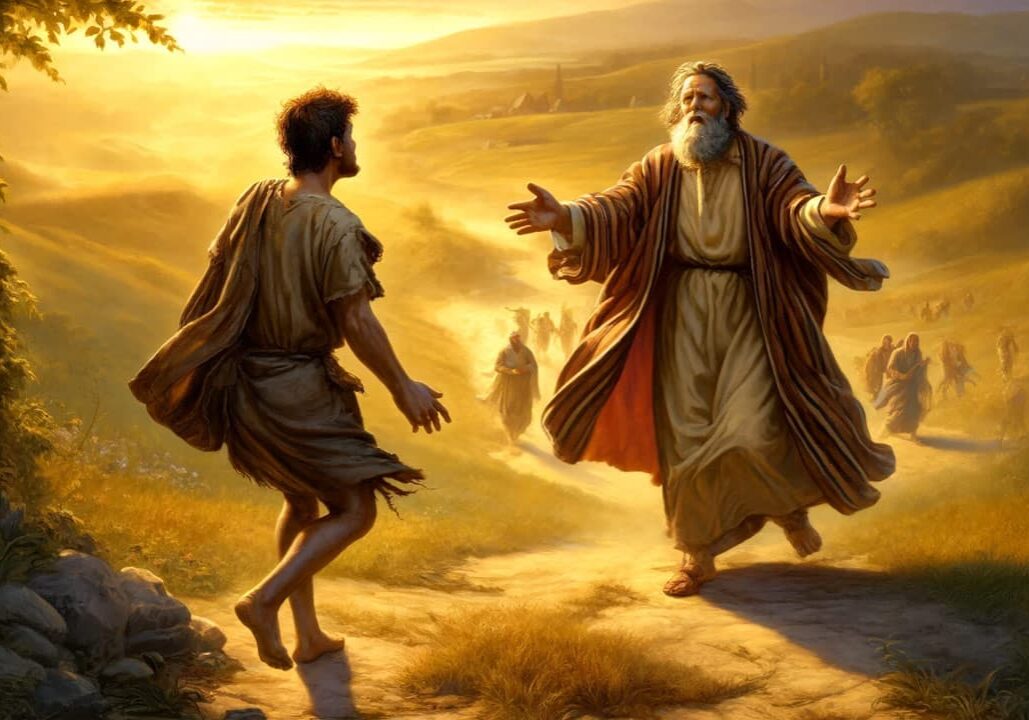
The father was dead to the younger son, when in fact, it was the younger son who, to the father’s great sadness and regret, was the one who was dead and lost. Yet, upon his true repentance, he was found alive again by the father, though considered worthy of death by the older brother. With judgment in his brow, it was the older brother who realized not his impending doom, rejecting the father’s pleas for him to be rich toward GOD, in the rejoicing at the homecoming of the younger. This situation is the summary of the Parable of the Prodigal Sons, which precisely reflected the situation before JESUS, which He hoped to remedy with His parable in St. Luke XV.
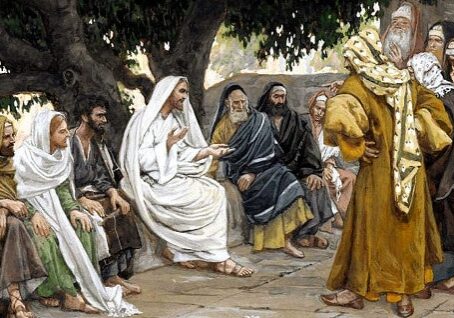
The problem began when the Pharisees and the scribes grumbled against JESUS; viz., they became indignant of and offended at JESUS, because He was receiving unto Himself tax collectors and sinners. (cf. Lk. 15.1-2) It is essential to note two key points in this narrative: JESUS did not go to hear the sinners, but rather received them to Himself, because they came to hear His word, which was the word of the Father — the Gospel of Salvation. St. Paul makes it clear that what the Pharisees and scribes were accusing JESUS of was disconnected from the truth, for “faith comes by hearing, and hearing by the Word of GOD” (Romans 10.17). –The people that JESUS received, though prodigal and wasteful in their possession of godly virtue, had come to themselves and turned from their ways so that they could hear the beatitudes of grace from JESUS, and allow faith to come by their hearing.
The second key point was it was not apparent to all present at this feast that JESUS had accepted another group of people to Himself, who were also prodigal and wasteful. And like the others, JESUS had also hoped that they would acquire faith in the hearing of His words. This group was the Pharisees and scribes. Yet, unlike the tax collectors and sinners, these Hebrews were not lacking in godly virtue. Instead, they were lacking in true justice, expressing itself in love for the father, through unconditional love for their brothers.
In the parable of the Prodigal Sons, two forms of idolatry are seen: the idolatry of gluttony through hedonism, and the idolatry of pride through self-righteousness. Both of these idols were visible in the hearts of the people present at this feast: tax collectors, sinners, scribes, and Pharisees. Idolatry was denounced by GOD in the Tanakh, or the Hebrew Scriptures – that which Christians call the Old Testament. The LORD GOD says in Leviticus 26, in warning to His chosen people Israel, “You shall not make idols for yourselves; neither a carved image nor a sacred pillar shall you rear up for yourselves; nor shall you set up an engraved stone in your land, to bow down to it; for I am the Lord your GOD … ‘And after all this, if you do not obey Me, but walk contrary to Me, then I also will walk contrary to you in fury; and I, even I, will chastise you seven times for your sins” (Leviticus 26. 1, 27-28).
And what is an idol? We just read about them in Psalm 115, where it is written: “Their idols are silver and gold, the work of men’s hands. They have mouths, but they do not speak; eyes they have, but they do not see; they have ears, but they do not hear; noses they have, but they do not smell; they have hands, but they do not handle; feet they have, but they do not walk; nor do they mutter through their throat. Those who make them are like them; so is everyone who trusts in them” (Psalm 115.4-8). St. Paul, in his letter to the Corinthians, also tells us what an idol is. Referring to that generation of Israel that fell in the wilderness and did not enter the Promised Land, he said: “Now these things became our examples, to the intent that we should not lust after evil things as they also lusted. And do not become idolaters as were some of them. As it is written, ‘The people sat down to eat and drink, and rose up to play.’ Nor let us commit sexual immorality, as some of them did … nor let us test Christ, as some of them also tempted … nor complain, as some of them also complained, and were destroyed by the destroyer” (1 Corinthians 10.6-10).
Idolatry is not something reserved for cavemen only; consisting of a sort of prehistoric genuflection to stones, precious metals, and trees. No, it is much more than that – much more progressive and aggressive! In Ezekiel 14, the leaders of the people of Israel had come to consult with the prophet of GOD about their current affairs and the state of their future existence, for they had recently been taken into bondage in Babylon for their rebellion against the Word of the LORD. Ezekiel writes: “Now some of the elders of Israel came to me and sat before me. And the word of the LORD came to me, saying, ‘Son of man, these men have set up their idols in their hearts, and put before them that which causes them to stumble into iniquity’” (Ezekiel 14.1-3). “GOD revealed to Ezekiel that this group of the elders of Israel consisted of double-minded men. Outwardly, they came to seek a word from GOD through His true prophet Ezekiel, but in their hearts, they harbored loyalties to other gods (idols).”1 And as such, they had stumbled into guilt before GOD. For, idolatry is not only a deed or act of the mind/heart that an individual must deal with, but idolatry also carries with it a burden of guilt as destructive sin before GOD and one’s family, community, and relational commitments – covenantal and affable.
The words of the prophets Isaiah and Jeremiah now fulfilled, the elders of Israel sought to placate GOD with the commanded ceremonial rites and feasts of the Law of Moses while in Babylon’s captivity. Yet, their hearts were far from GOD. These men had set-up spiritual idols in their hearts that were causing them and the people to stumble into iniquity. For we commit idolatry when we erect anything that seeks to replace GOD in our hearts. St. Paul tells us in his letter to the Colossians that the idols of the heart are the aspects of our fallen nature, expressed by our passions and personalities, which resist submission to GOD as Creator and King. Thus, Paul says to seek those things which are above, where Christ sits at the Father’s Right Hand, and to “put to death your members/personalities which are on the earth, including fornication, uncleanness, passion, evil desire, and covetousness, which is idolatry” (Colossians 3.5).
This is what the elders of Israel were guilty of when they came to seek a word from the LORD by Ezekiel. They had erected idols in their hearts that were contrary to the explicitly revealed word and commands of GOD – they were worshipping things below that the passions and personalities which their selfish hearts desired. We know this is true, because the LORD offers correction to them through the prophet Ezekiel, saying: “‘Enough, O princes of Israel! Remove violence and plundering, execute justice and righteousness, and stop dispossessing/impoverishing My people [of their inheritance],’ says the LORD GOD. ‘Henceforth, you shall have honest scales [and honest offerings unto the LORD]’” (Ezekiel 45.9-10).
As in Ezekiel’s day, the Pharisees and scribes of JESUS’ day were desirous in their hearts of the same self-ennobling idols. It was more than obvious what the tax collectors and sinners were worshipping. They wore it on their sleeves, and everyone knew them for their lifestyles. Like the younger brother, they had asked the father for their inheritance, and they had gone out to a spiritual ‘far country’ and lived prodigally – wastefully. They had wasted their spiritual possessions, and they would fill their stomachs with the pods that the swine ate instead of feasting with the father. Yet, they remembered the grace and mercy of the Father, and, thus, they came to their senses, and at JESUS’ invitation, hearing His words, they believed and returned to their spiritual home and were welcomed in by the LORD of the House. — This disturbed the Pharisees and the scribes – the older brothers.
You see, the older brothers had obeyed the Father, doing all that He had commanded, and they were looking for a word from JESUS that would commend and even justify them in their religiosity and pride. Instead, JESUS said to them: “Woe to you, scribes and Pharisees, hypocrites! For you pay tithe of mint and anise and cummin and have neglected the weightier matters of the law: justice and mercy and faith. These you ought to have done, without leaving the others undone. Blind guides, who strain out a gnat and swallow a camel! Woe to you, scribes and Pharisees, hypocrites! For you cleanse the outside of the cup and dish, but inside you are full of extortion and self-indulgence. … Woe to you, scribes and Pharisees, hypocrites! For you are like whitewashed tombs which indeed appear outwardly beautiful, but inside you are full of dead men’s bones and all uncleanness. Even so, you also outwardly appear righteous to men, but inside you are full of hypocrisy and lawlessness” (St. Matthew 23.23-28).
The tax collectors and sinners were exposed for who they truly were, but they were repentant for their idolatry and the guilt brought upon them for it. Yet, the Pharisees and scribes were lying to GOD in their hearts; they wished GOD dead, and they, alone, the possessors of the Kingdom alone. They idolized being Masters of the Old Covenant world without guardrails and restrictions on the sovereignty and authority of their wills, especially when it came to judging who was worthy of the Kingdom and who was not. For they were quick to buffet JESUS for His call to obedience to Moses’ Law to have mercy in truth, by angrily saying: “Lo, these many years I have been serving you; I never transgressed your commandment at any time; and yet you never gave me a young goat [and a feast] that I might make merry with my friends. But as soon as these sons and daughters of yours came, who have devoured your livelihood with harlots, you killed the fatted calf for them” (St. Luke 15.29-30).
JESUS’ parable of the prodigal sons, both wasting the possessions of the loving heart of the father, cuts deep. It does so, because we can see ourselves undeniably identified in the image portrayed by both sons. At one moment, we are profligate with our virtue and morality, and at another time, self-righteous and judgmental in our spiritual arrogancy. Like the Colossians, we need to be cautioned not to be carnally minded, but heavenly minded. “Putting to death your members”, St. Paul says, “which are on the earth: fornication, uncleanness, passion, evil desire, and covetousness, which is idolatry. Because of these things, the wrath of God is coming upon the sons of disobedience” (Colossians 3.5-6). –Yet, thanks be to GOD, the principal character in this parable is not the sons – it is not the grotesqueness of their idolatry, despite the amount of ink spilled to describe it. Instead, JESUS’ parable is principally about the character and essence of the father!
Notice what the father does, which no self-respecting and honorable first-century patriarch in Israel would have ever done. First, he complies with the youngest son’s wish, and he issues him the inheritance only due to him upon the father’s death. In other words, he humors the youngest’s unveiled wish that the father was dead, and he free to take what was his father’s, doing with it as he would. He idolized, in his pride, the freewill power given to him as a result of his birthright, and he exchanged it for a bowl of putridity and naughtiness. And, regardless of this, the father, when the youngest had come to his senses and turned back home from his profligate pilgrimage, saw him afar off and had compassion, and ran and fell on his neck and kissed him. The father called for his best robe and ring to be put on his prodigal son without judgment or criticism. For to the father, formalities aside, this son of his who was dead was alive again – he was lost and now found.
As for the older son, in spite of his silent anger and condemnatory and disparaging hatred for his brother, the father came out from the reunion party, leaving his guests and his newly revived son, and begged the older brother to come in and join them. He reminded the older brother that all that he had was his, if only he would “not grieve the Holy Spirit of GOD … and would let all bitterness, wrath, anger, clamor, and evil be put away from him, with all malice. And [instead], to be kind to his brother – tenderhearted, forgiving him, even as GOD in Christ would forgive him” (Ephesians 4.30-31). The father in the parable of the Prodigal Sons, reveals who GOD the Father truly is. In this parable, the father longs, without prejudice, for both of his lost sons to return to him. As such, he is illustrative of GOD the Father, who longs for all of his prodigal children (me and you), to return to Him and be found – to be made alive again in Christ – to join in the Feast of Transformation and New Life – the Feast of the Holy Communion.
The parable of the Prodigal Sons shows us what the love of GOD is like. We see in this parable reflections of ourselves: profligate and self-righteous. Further, and more importantly, we see that the father desires that both of his sons would come to their senses and turn back Home to Him. For, dear church, the Father desires not the death of a sinner, but that he would turn from his wickedness and lawlessness and live.
“Therefore, my beloved, let us flee from idolatry … we cannot drink the Cup of the LORD and the cup of demons; you cannot partake of the LORD’s Table and the table of demons. Why do we provoke the LORD to jealousy? Are we stronger than He?” (1 Corinthians 10.14, 21-22). Brothers and sisters, let us come to ourselves, renew our hearts and minds, and recall the goodness and mercy of the Father. Let us turn and run to Him – JESUS has shown us the way – for our Father is there awaiting us – at the Table of Grace with the ring of redemption, the robe of renewal, and new sandals as His shods of peace. — Come beloved, all has been made ready – our Father and His only-begotten Son JESUS await us – they await our return. Won’t you come with me. Please come – let’s go home together to our Father. Amen.
1 Radmacher, ThM., Earl D., et al., Nelson NKJV Study Bible, 3rd ed., “fn. Ezekiel 14”, (New York: Harper Collins, 2018), 1166.

Join Us for Biblical Worship, Study, & Fellowship
Sundays:
Coffee and Fellowship 8:30 am
Catechesis for all ages 9:00 am
Holy Communion 10:30 am
Recent Sermons
Trinity Twenty Sunday
Worship with Us
Join us for Biblical worship, study, and fellowship. We currently meet in the sanctuary of Christ the King Lutheran Church in Waxahachie.
Catechesis for Adults and Children 5+
Sundays at 9:00 am
The Order of Holy Communion
Sundays at 10:30 am
Fellowship Opportunities
See our calendar for other weekly and special events.